
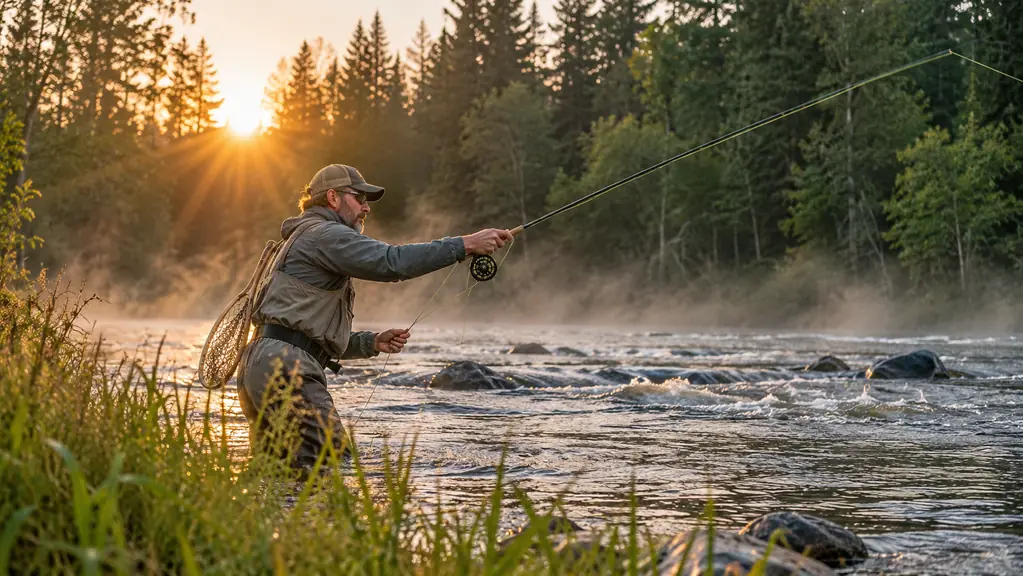
There is a particular disappointment that comes from a starter kit. You open the box, everything matches, everything is present, and then on the third trip something strips or a guide starts eating line and you understand the whole thing was assembled to look complete rather than to work. I have opened a lot of boxes like that in fifty-eight years. I have also opened parts boxes on an airframe that looked identical from the outside and held tolerance for two decades. The difference is never the packaging. It is whether somebody thought hard about which part fails first and spent the money there.
The Wild Water Standard combo is a nine-foot, five-weight graphite rod with a reel, line already spooled, a nine-foot 5X leader, nine flies, a waterproof fly box and a rod case. It is a starter kit and it is priced like one. I have fished it on the Deschutes, on the Crooked where you can wade most of it, and on two Cascade lakes in July when the trout are cruising and refusing everything you throw. What follows is what I actually found, including the half I do not like, because a review that only covers the good half is a sales sheet with a byline on it.
The Quick Verdict
Buy it for the rod, which is genuinely good. Expect to replace the reel and the flies within a season or two.
Amazon Check Today's Price →The rod is the part worth paying for. Here is the current package.
Nine feet, five weight, lined reel, 5X leader, nine flies, waterproof box and a rod case. Fishable the day it lands on your porch.
Amazon Check Today's Price on Amazon →How I've Actually Used It
I have had this outfit a bit over two seasons. It lives in the back of the Tacoma under the canopy, which is not how you are supposed to store a rod, and it has come out the same every single time. It has also become the loaner. When somebody new wants to try fly fishing and does not own a rod, this is the one I hand them, and that is a compliment whether or not it sounds like one. A rod a beginner can cast on the first afternoon, in wind, with no coaching beyond where to put their hand, is doing something right.
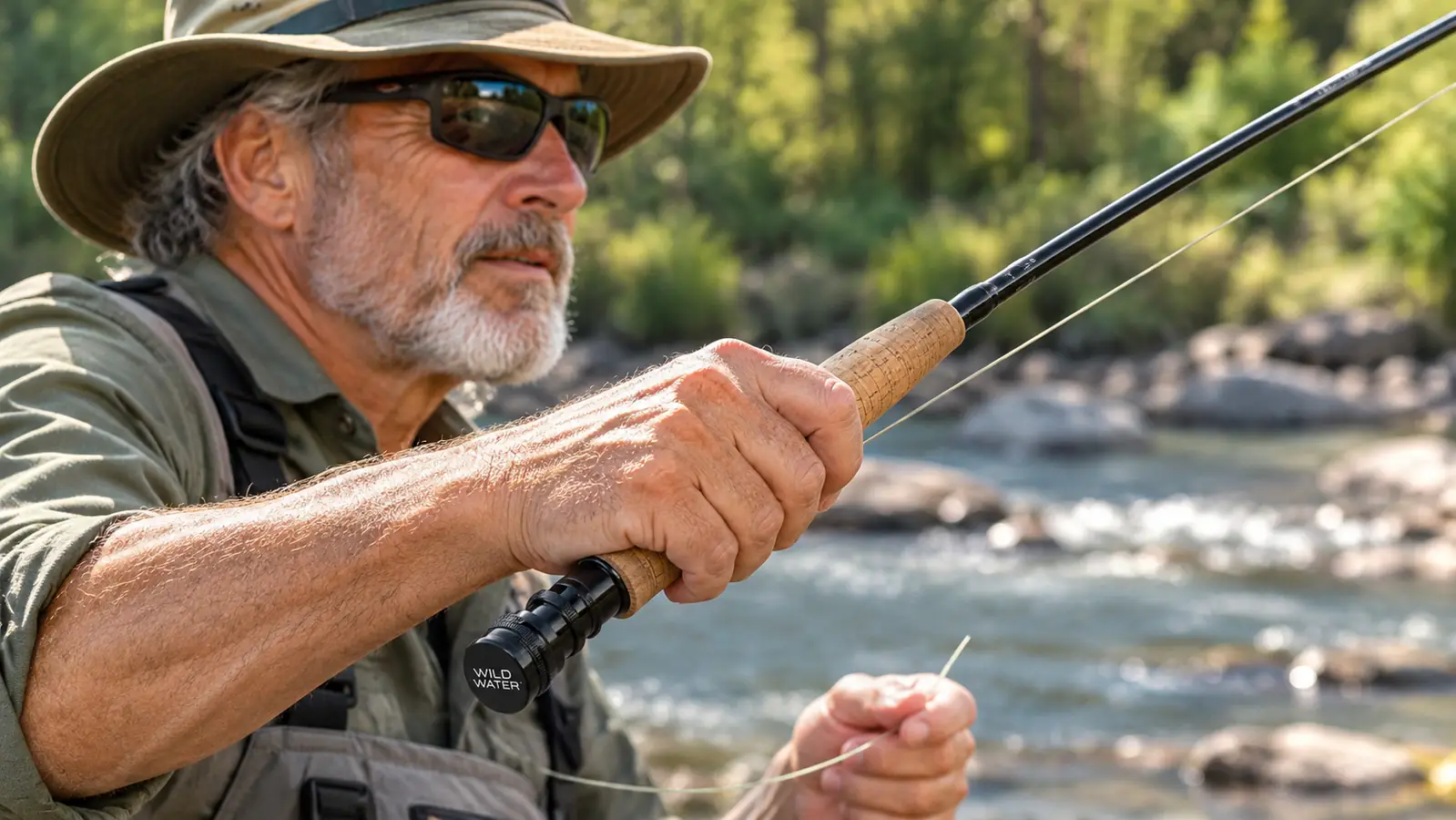
The version I fish is the five-weight, nine-foot, and the rod weighs 4.4 ounces by the spec sheet. That number matters more than it looks. Nine feet is the length that does the most jobs at once: long enough to mend line across a current seam, short enough to cast back under a bank, and light enough that your shoulder is not the reason you quit at four in the afternoon. The grip is cork. It has not gone slick on me, which is the failure mode I watch for.
The first season I kept a small notebook in the truck door pocket, and I wrote down the date and the water and how the rod felt, the way I used to log a squawk on a maintenance form. June 8, Crooked River below the dam, seventy-two feet of line and a size 16 bead head, no wind, and the loop turned over clean as a whistle every cast for two hours. July 21, Deschutes at the mouth of the Warm Springs, wind coming upriver by one in the afternoon, and the same cast collapsed into a pile at forty feet. Same rod, same caster, different conditions. That log is why I can tell you where this rod stops instead of guessing at it.
Medium power is what the listing calls it, and that is accurate. It is not a broomstick and it is not a noodle. It will throw a five-weight floating line forty feet with almost no effort from the caster and sixty feet if your timing is clean. Where it stops is wind. When the gorge wind comes up the Deschutes in the afternoon, this rod runs out of backbone before a stiffer rod would, and you feel it as a loop that collapses at the end. I would rather tell you that now than have you discover it with fish rising.
What Comes in the Box
The package is the rod, the reel with line already on it, backing under the line, a nine-foot 5X leader, nine flies, a waterproof fly box, and a protective rod case. The whole thing weighs 2.5 pounds on the shipping scale.
Two things about that list deserve attention. First, a lined reel in the box saves you an hour and the cost of a line, and it means the outfit is fishable the day it arrives instead of the day you get around to ordering a line. Second, the line is a weight-forward five floating line, which is the correct general-purpose choice for trout in moving water and will also cover the bass the listing names as a target species. Nobody is going to compliment you on the line. It also will not be the reason you do not catch fish.
What is not in the box: nippers, forceps, floatant, tippet spools, a net, and a pack or vest. Assume you are buying those separately, because you are, and count that against the kit when you do your own math. I laid the kit out on the tailgate the first evening and then laid out what I planned to add, and the add-on pile was longer than the kit pile. That is normal for a starter outfit. It is still worth knowing before you order.
Setting It Up the First Time
Setup is mostly tying on the leader and picking a fly. Two notes from somebody who has watched this go wrong. Check the leader for a wind knot before the first trip, because a leader that has sat coiled in a box can hold a kink where it was wrapped, and a kink is a break with a delay on it. And when you join the rod sections, push straight in and stop when it stops. Do not torque them. I have seen more rods ruined by over-seating than by fish.
I learned the leader lesson the hard way in my second season on the Metolius, at a run I had walked half a mile to reach. Second cast, the leader parted at a kink about two feet above the fly, and I stood there looking at a perfectly good afternoon with no way to fish it. Now I run the leader between two fingers from butt to tippet before I leave the truck, every trip, and I have not lost an afternoon to it since. Takes about fifteen seconds. Run your fingers over the whole length and you will feel a kink as a flat spot or a small hard knot.
The reel is listed as ambidextrous, so set it for the hand you do not cast with and then leave it alone. Rinse the rod with fresh water after a day on the Deschutes, strip the line through a clean cloth before you put it away, and this outfit will look in three years the way it looks now. None of that is specific to Wild Water. It is just what keeps gear alive, and it is the difference between a kit that lasts and a kit that gets blamed.
The Rod Is the Reason to Buy This Kit
Strip the kit down to the one piece you would keep if you could only keep one, and it is the rod. IM8 graphite, nine feet, five weight, medium power, cork grip, and the whole outfit costs less than a mid-tier rod alone. I have cast worse rods that cost more than this entire package, and I have owned one of them.
The action is friendly. It loads early, which means a beginner can feel the rod working with only twenty feet of line out and does not have to guess at it. On a river that translates into casts that land where you were looking instead of somewhere off your shoulder. I have watched two people who had never held a fly rod put a fly within a foot of the far bank inside twenty minutes with this thing. That does not happen with a fast rod and a beginner holding it.
The mechanic in me looks at the parts you touch. The cork is cork, not filler dressed up to look like it. The guides line up true down the blank. I have run a cotton swab around every guide foot on this rod and not found a burr, which is more than I can say for rods I have paid more for. A burr is what eats a fly line from the inside out, and it is the first thing I check on anything new. I did it on this rod the evening it came out of the box, sitting at the kitchen table with the sections laid out on a towel, and the swab came back clean at all nine guides plus the tip top. Joanne asked me what I was doing. I told her I was inspecting an airframe. She went back to her book.
What I Liked
- A forgiving five-weight that a beginner can cast on the first afternoon without a lesson
- Arrives lined, with backing and a nine-foot 5X leader already on the reel, so it is fishable out of the box
- Includes a waterproof fly box and nine flies, which is enough to actually start fishing
- Nine feet at 4.4 ounces is light enough to fish all day without your shoulder complaining
- A protective rod case is included, which kits at this end usually skip
Where It Falls Short
- The reel is the weak link. It holds line fine, but it is not built for a fish that takes you into the backing
- The nine flies are a sampler, not a working box for any specific river
- Medium power runs out of backbone in a hard afternoon wind
- No nippers, tippet, floatant or net, all of which you will buy in the first week
I have watched two people who had never held a fly rod put a fly within a foot of the far bank inside twenty minutes with this rod.
The Reel and the Line
Here is the half the listing does not lead with. The reel is a working reel. It holds the line, the spool turns freely, it has a 20 pound line capacity rating, and across two seasons of trout fishing it has not seized or dropped a spool in the water. That is a low bar and it clears it. What I cannot tell you is that it will survive a good fish in current, and I am not going to pretend otherwise to make a kit sound better than it is.
On the Deschutes a hot redside will take you into the backing before you have thought about it, and the reel is the part of this package I would least want to be relying on at that moment. If the fish you chase run under fourteen inches, this is irrelevant and you can ignore the whole paragraph. If they do not, plan on replacing the reel before you replace the rod, and put that cost into your math now rather than in September.
The line is the pleasant surprise. A weight-forward five floating line is the right line for this rod, it comes already on the spool, and it shoots well enough that a beginner will not know the difference between it and a line costing three times as much for at least a season. Keep it clean and out of the sun when you can. That advice is free and it doubles the life of any line ever made. I stretch mine once at the start of each month in season, about thirty feet at a time, pulling against the tension of my own hands for ten seconds a section. It takes two minutes and it stops the coils that otherwise show up as a tangled mess on the first cast of the morning.
The Flies Are a Starting Point
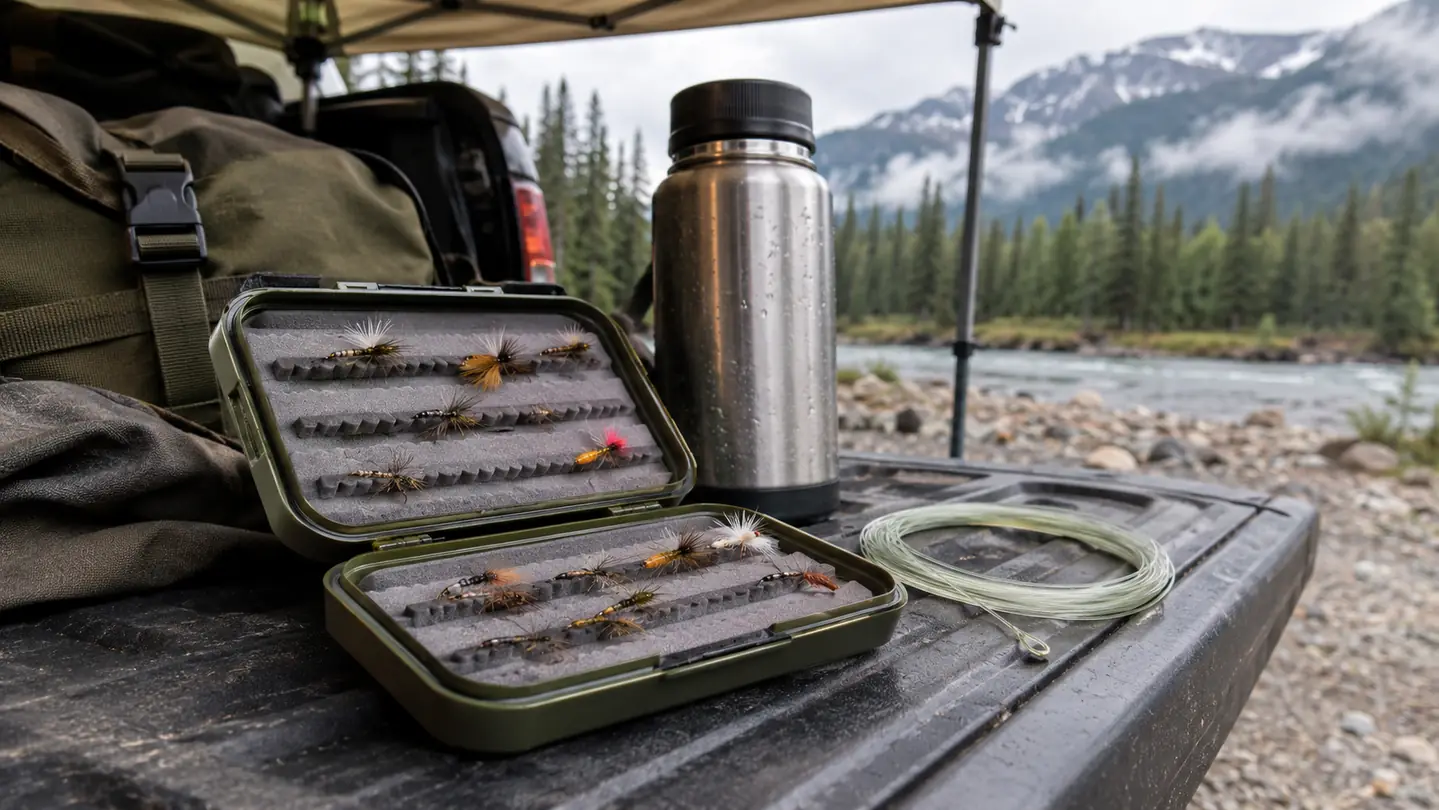
Nine flies in a waterproof box sounds generous until you open the box. The assortment includes size 12 black winged ants and size 12 tungsten bead head nymphs, which tells you it was assembled for trout in moving water, and as a starting point it is sensible. It is not a selection for the Deschutes in May or the Metolius in October. Those rivers want particular things and you will work out what on your own, which is half of why anyone does this at all.
What the box really buys you is a way to make the first trip without standing in a fly shop for forty minutes pretending to know what you want. Fish the ants in the afternoon when nothing is hatching. Get the bead heads down in the morning. You will catch fish, and more usefully you will start reading what the river is doing. Buy flies after that, once you know what you are buying them for. A shop in Bend will sort you out in ten minutes if you tell them where you fish. That is not a throwaway line either. Walk in, say you have a five-weight and you are headed to the Crooked on Saturday, and let them hand you six flies. It will beat anything you pick off a wall by yourself.
Where It Falls Short
Three things I would change. The reel, as covered. The fly assortment, as covered. And the case, which is a protective case and does what it says, but I would not put it into airline luggage without a hard tube around it. If you travel to fish rather than driving to fish, budget for a tube. That is a small thing, and it is the kind of small thing that ruins a trip.
There is a fourth thing and it is not Wild Water's fault. A kit like this makes it easy to skip the part where you learn. The rod will cast for you up to a point, and then it will stop casting for you, and the fish you lose in year two will be lost because of your casting and not because of the equipment. Take a lesson. Practice on the lawn when the wind is down. The rod is not the limiting factor and it will not be for a while.
One more, since I am being honest. The kit is a five-weight, which means it is good at most things and excellent at none. If you fish small creeks with brush on both banks, a five is too much rod. If you chase steelhead, a five is not enough. It sits in the middle of the road, and the middle of the road is a fine place to learn and a frustrating place to specialize.
Who This Is For
This is for the person who wants to be fishing this weekend and does not want to spend three weekends assembling an outfit one piece at a time. It is for the angler who gets out a handful of times a summer on medium rivers and small lakes and wants one five-weight that handles all of it without being precious about it. It is for the person who wants a second rod in the truck so they can hand it to a friend and say try this. If any of those is you, the Wild Water kit does the job, and the rod will outlast everything else in the box by years.
Who Should Skip It
Skip it if you already own a decent five-weight, because this adds nothing you do not have. Skip it if you regularly fish water where a twenty-inch fish in current is a real possibility, because you will be buying a reel anyway and you should buy the rod and the reel separately and get what you actually want. Skip it if you want a two-weight for small creeks or a seven for steelhead, because this is a five and it will stay a five. And skip it if you want the fly selection solved for your home water, because nine flies is a sampler, not an answer.
If you want to be on the water this weekend, start here.
Nine-foot five-weight, lined reel, 5X leader, nine flies, waterproof box and a rod case. Buy it for the rod. Plan on a better reel when the fish get bigger.
Amazon Check Today's Price on Amazon →