
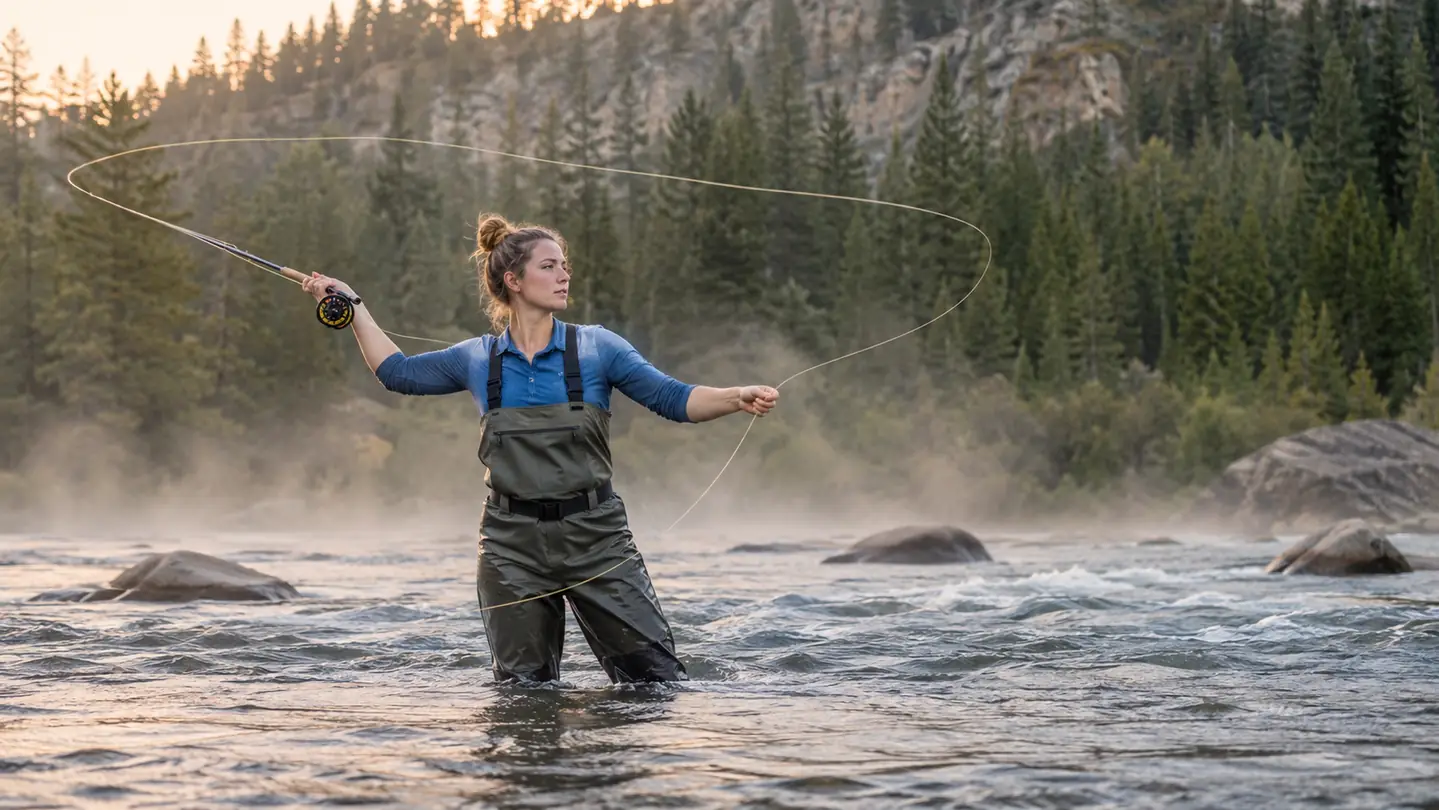
The leak found me on the Metolius in February, four inches above the boot on an inside seam, on a morning so cold the river was steaming. I felt the water arrive before I understood what it was. By the time I got back to the truck my left sock weighed more than my reel, and I spent the drive home doing quiet arithmetic on what I had spent on waders over ten years. The number bothered me more than the wet foot did.
So I changed how I buy them. Instead of another spendy pair, I picked up the FROGG TOGGS Hellbender, a stockingfoot chest wader in 100 percent nylon that comes in at 3.1 pounds on my shop scale. I have fished it hard since early spring. That is roughly forty days on the water now, spread across the Deschutes, the Crooked River and a handful of Cascade lakes, plus one opening weekend I would rather not relive. This is what I found. Where it holds up, where it does not, and who I would hand it to without hesitation.
The Quick Verdict
Dry, light and simple. It will not last a decade and the fit is not custom, but for the angler who fishes a few dozen days a year it does the job without drama or complaint.
Amazon Check Today's Price →Seven months in and my socks are still dry
The FROGG TOGGS Hellbender is a 3.1 pound stockingfoot wader in 100 percent nylon, built for pull-on simplicity and priced well below the brand names. Check the current price before your next trip.
Amazon Check Today's Price on Amazon →How I've Used It
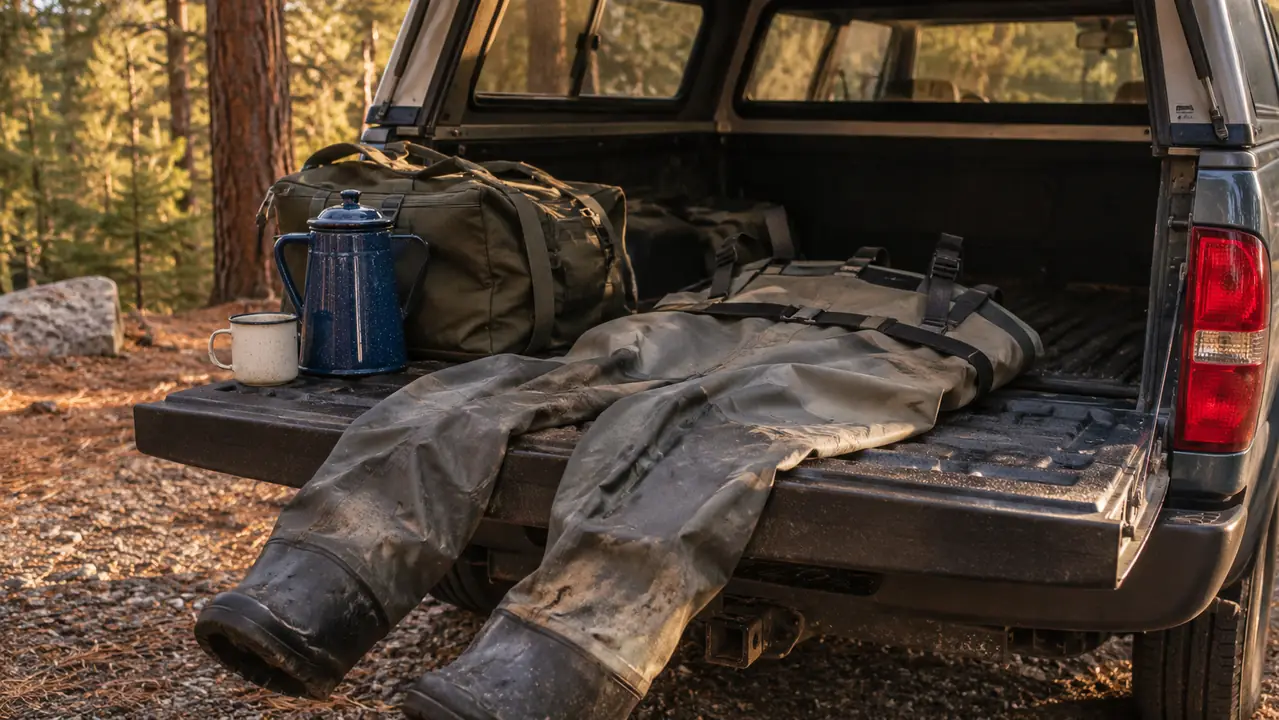
My gear lives in the bed of a 2011 Tacoma under a canopy for days at a stretch. Waders get folded, stacked under coolers, and hauled out at 5 a.m. in the dark with a headlamp in my teeth. That is a harder life than most waders get, and it is the exact life this pair has had since March. If a seam is going to give, the truck bed usually finds it first.
A normal day starts at the tailgate. I pull the waders on standing in gravel, which is the real test of a pull-on design, then lace my wading boots over the stockingfoot. Joanne comes along on about one trip in four. She does not fish. She reads in the cab and makes coffee on the tailgate stove, and she has heard me complain about wet socks often enough that in June she asked, flat out, whether the new ones were working. They were. First time in years I could answer that question without a caveat.
Most of what I do is wade fishing. I am in the water to my thighs on the Deschutes, sometimes deeper on the Crooked when the bank I want is on the other side. I have also worn these in the rain on the bank all day, which is not what they are sold for but is what happens in Oregon in April. They kept the rain out and they kept the river out, and I walked back to the truck dry from the waist down both times.
One morning in late March is the one I keep coming back to. I was on the Deschutes below Warm Springs, air temperature somewhere around 28, and I waded out to a slot on the far seam of a riffle where I have moved fish before. The water came up to my third rib. I stood in it for an hour and a half barely moving, which is the sort of thing that finds every weakness a wader has. The booties stayed warm with a midweight wool sock inside, the shell kept the wind off my chest, and when I finally waded out to warm my hands the only wet spot on me was a sleeve from reaching into the net. I have owned waders where that hour and a half would have ended at the forty minute mark with a walk back to the truck and a change of socks.
Nylon, Three Pounds, and What That Actually Means
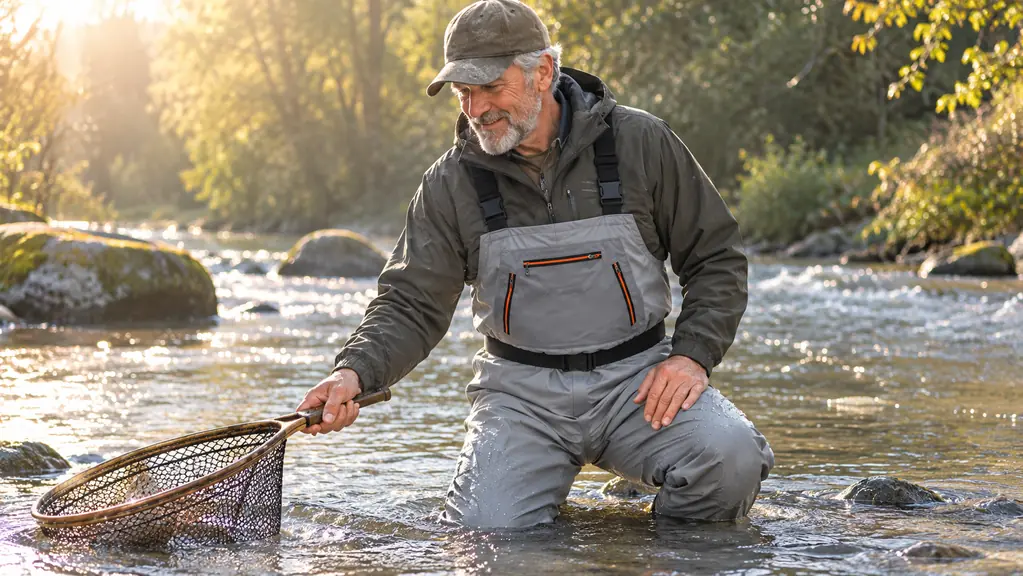
The listing says 100 percent nylon, medium weight, medium stretch, 3.1 pounds. What that means in practice is that the waders fold down small enough to sit at the bottom of a duffel and light enough that carrying them a half mile up a Cascade trail in July does not feel like a penalty. My previous pair weighed noticeably more, and I noticed it every single time I put them on. Three pounds is not ultralight. It is on the light side for a chest wader, and it is the difference between bringing them and leaving them in the garage.
Nylon is not a fancy material and this review is not going to pretend it is. It has some give, which matters when you are stepping over a downed log or kneeling in the shallows to release a fish without dunking your chest. It also takes a crease. Folded in a truck bed for a week, it comes out looking like it was folded in a truck bed for a week. Nothing failed because of that, and I stopped caring about the wrinkles around the second trip.
Packing is where the weight shows up in a way you can actually measure. For a three day trip in July I load a duffel with a sleeping bag, a stove, two changes of clothes and the waders. The Hellbender folds down to about the footprint of a loaf of bread and lies flat on top of everything else. My old pair had to go in first and the rest of the load had to be built around it. That is not a marketing point, it is the reason I still carry waders up the trail to a high lake instead of leaving them in the truck and wet wading in water that reads 52 degrees on the thermometer.
The one thing I would tell a friend: weight is the spec that matters if you walk in anywhere. The fabric weight matters less than you think. I have worn heavier nylon that felt colder and lighter nylon that felt flimsier, and the Hellbender sits in a sensible middle. It is imported, which is on the label and worth knowing, and the fit type is listed as regular, which brings me to the part people actually argue about.
Fit, and the Pull-On Question
The closure is pull-on, the fit is regular, and there is no way around this. A pull-on wader fits whoever it fits. There is no dialing it in. I am 5 foot 10 and about 175 pounds, and the regular landed where I wanted it, with room in the chest to layer a fleece underneath in March and enough room in the legs to squat down and tie a fly. If you land between sizes, go up. The fabric has medium stretch, but the seams do not stretch at all.
Getting in and out is the part nobody puts in the description. Pull-on means you step in and haul it up over your shoulders, which takes me about a minute at the truck and closer to three in a cramped camper with the canopy down. In the dark, on gravel, in the cold, that minute matters more than it sounds. It is still faster than fighting a zipper with numb hands, and I have done both.
Layering is the other half of the fit question and it does not get discussed enough. In March I wear a base layer and a midweight fleece underneath and there is still room to swing my arms through a cast. In August I wear shorts and a t-shirt and the legs have enough slack that I am not fighting the fabric when I step over a log. The place it shows up is the shoulders, and it shows up honestly. There is no adjustment strap, no cinch, nothing to take up slack. Whatever the cut gives you is what you get, every trip, forever.
A friend of mine who is 6 foot 2 and about 230 pounds tried them on at the tailgate in May. He got them up over his shoulders and said the crotch pulled when he raised his arms overhead, which is roughly what you would expect from a regular cut on a bigger frame. He did not buy a pair, and I would not have talked him into one. That is the honest answer to the fit question, and it is the reason I keep saying go up a size if you are anywhere near the line.
The stockingfoot is the part I care about most, because I fish a lot of different water. A stockingfoot lets me pick the boot for the day. Felt on the Deschutes where the rock is slick, rubber on the Crooked where the banks turn to mud, whatever the shop recommends when I am somewhere new. I would not go back to a bootfoot for the kind of fishing I do, and I would not buy a wader that locked me into one sole for everything.
Seven Months of Wear
These have been wet and dried out around forty times. I hand wash them, which is what the care instructions call for, and I hang them over a beam in the garage. No machine, no dryer, no detergent beyond a mild soap. That routine is a chore and I do not love it, but I have seen what a hot dryer does to a nylon shell and I am not going to be the guy who learns that lesson twice.
The routine itself, since the instruction is easy to say and vague to follow: I fill a clean plastic tub with about two inches of cool water, add a capful of mild soap, and work the waders through it by hand, paying attention to the inside of the legs and around the booties where grit collects. Then I rinse twice and hang them over the garage beam with the feet up so the water runs out the waist. Twenty minutes, start to finish, and I do it every third or fourth trip rather than every trip. That is probably not often enough and I know it.
The one leak I have had is a pinhole in the left leg at about knee height. I am fairly sure it came from a barbed wire fence on a shortcut back to the truck that I should not have taken. I found it with the soapy water trick, patched it in ten minutes, and it has not moved since. That is not a warranty issue. That one is on me.
The seams have held. The fabric has not delaminated, which is the failure mode I have seen on cheap waders after a season of sun and cold. They look used. I would not call them new-looking and I would not try to. But in October they were doing the same job they did in April, and the manufacturer warranty is one year, which is shorter than I would like and worth knowing before you buy.
Forty days on the water, one pinhole at knee height, and the pinhole was my own fault and a barbed wire fence.
Where It Falls Short
Here is the honest list. In July heat this wader is warm. Standing in a riffle at noon in August, I am aware of it in a way I am not in October. I would not want to hike far in it on a hot day. That is the trade for the weight and the material, and for cold water fishing, which is most of what I do, it is a trade I would make again without thinking about it.
The one year warranty is short, and I would rather see three. Hand wash only is a genuine inconvenience if you fish a lot, and it is the kind of instruction people ignore right up until a seam lets go. The pull-on fit means that if your body is not reasonably close to the middle of the size chart, you will feel it in the shoulders. And this is not a piece of gear you will hand down. I expect several seasons with care, then a replacement. If that bothers you, spend more and buy heavier.
What I Liked
- 3.1 pounds, light enough to carry in and easy to fold into a duffel
- 100 percent nylon with medium stretch that lets you kneel and step over deadfall
- Stockingfoot design lets you match the boot to the water and the riverbed
- Pull-on closure gets you dressed in about a minute at the tailgate
- Seams and shell have held through roughly forty wet and dry cycles
Where It Falls Short
- Warm in summer heat, and not something I would hike in on a hot afternoon
- One year manufacturer warranty is on the short side
- Hand wash only, which is a real chore if you fish often
- Pull-on fit means no adjustment, so a mid-chart body fits best
- Expect several seasons, not a decade, before replacement
Who This Is For
This is the wader for the angler who fishes twenty to fifty days a year, wades more than they float, and wants something light enough to carry and simple enough to get into before the coffee is cold. It suits the Deschutes regular, the Crooked River walk-in, the high lake guy in July. It also makes a sensible second pair to keep folded in the truck so you are never the one who stayed home because the good waders were drying in the garage.
Who Should Skip It
If you guide, fish a hundred days a year, or stand in genuinely cold winter water for hours, buy heavier and pay for the longer warranty. If you need a precise fit through the shoulders, have something made to measure instead of forcing a pull-on regular. And if hand washing gear is the kind of chore you will skip, be honest with yourself, because that is how waders die early.
If your socks are staying dry, that is the whole review
FROGG TOGGS Hellbender, stockingfoot, 100 percent nylon, 3.1 pounds, one year manufacturer warranty. Check today's price before your next morning on the water.
Amazon Check Today's Price on Amazon →