
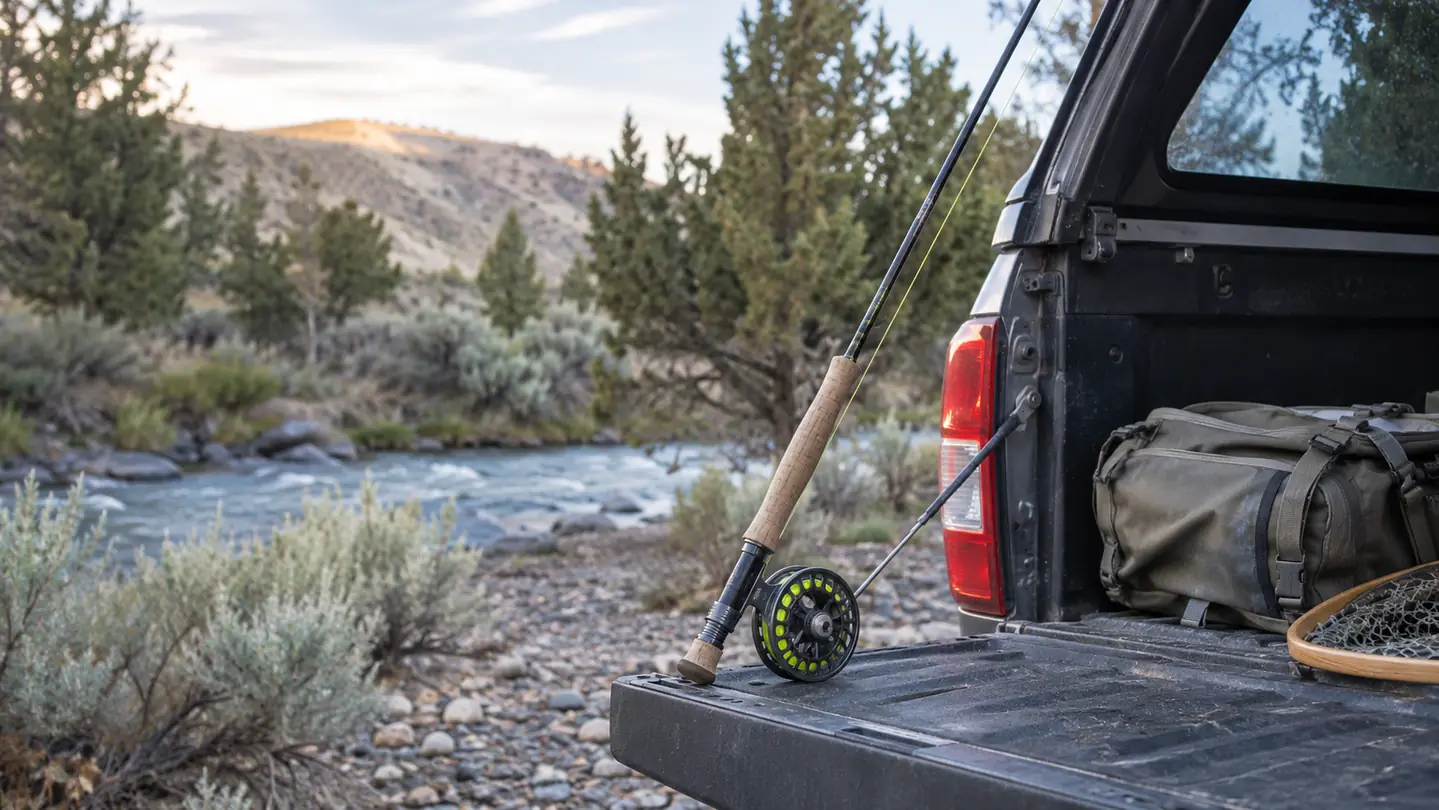
The first fly rod I ever owned, I bought in pieces. Rod from one shop, reel from a second, line ordered online because it was marked down, then backing and leader and tippet and a handful of flies added over about three weeks. By the time I got to the Deschutes I had spent more than I planned and I still was not sure the line matched the rod. It did not, quite, and I spent most of that first season thinking I had forgotten how to cast.
That is the whole argument for a combo, and it fits in one sentence. The Wild Water Standard Fly Fishing Combo Starter Kit arrives as a matched system: a 9-foot 5-weight rod, a reel, the line already wound on the spool, backing, leader, nine flies, a waterproof box and a rod case. Nothing to match up at the counter. Nothing to get wrong on a Friday night.
Ten pieces, one box, and nothing left to match up
Rod, reel, line, backing, leader, flies, box and case arrive already sorted. The Wild Water combo is the shortest path from ordering to actually fishing.
Amazon Check Today's Price on Amazon →You skip the line-matching homework entirely
Line weight has to match rod weight or the rod never loads properly and your cast dies at forty feet. Get it wrong and you will spend a season convinced the problem is you. The reel in this kit comes spooled with a WF5-F floating line that matches the 5-weight rod in the same box. Somebody already did the arithmetic. You are just the person holding the cork.
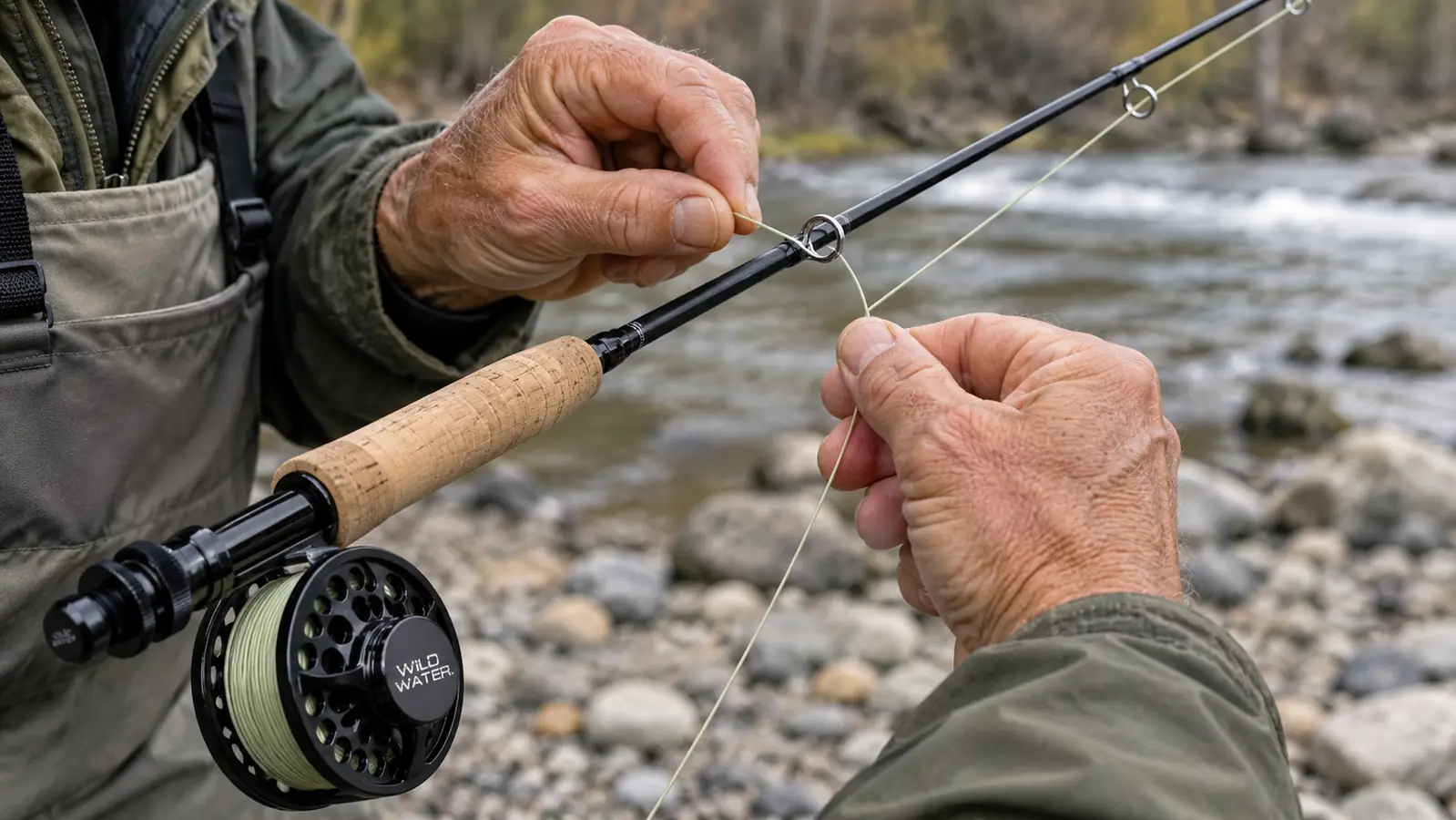
The reel arrives spooled, not empty
An empty reel means backing first, then line, then a leader, and an arbor knot you have to get right on the first try. This one shows up with 20 lb backing under the line and a 9-foot 5X leader already in place. On your first trip you tie on a fly and fish. That is the entire assembly process, and it takes about as long as threading the guides.
A rod case ships in the same box
Fly rods do not break in rivers. They break in trucks, in garages, and under a cooler in the bed of a pickup. The kit includes a protective rod case, and that sounds like a minor line item until you price one on its own and realize it is not. Buy pieces separately and the case is the thing you keep putting off until the rod has already been broken once.
Nine flies and a waterproof box get you fishing
The kit comes with nine flies in a waterproof fly box, including size 12 black winged ants and size 12 tungsten bead head patterns. That is not a lifetime supply. It is enough to fish a weekend without standing in a fly shop guessing at what the fish want. The waterproof box matters more than people expect: it floats, and your flies stay dry after you drop it in the shallows.
The 5/6 weight range covers the fish most of us actually catch
Line weight 5 on a rod rated 5/6. That range is the sensible middle. Light enough to set a size 16 dry down soft on a rising trout in the Metolius, stout enough to turn over something bigger when you are chasing bass. A 3-weight is a specialist. An 8-weight is a specialist. A five is what you hand somebody who wants to catch fish this season instead of collecting rods.
Nine feet of medium power does everything reasonably well
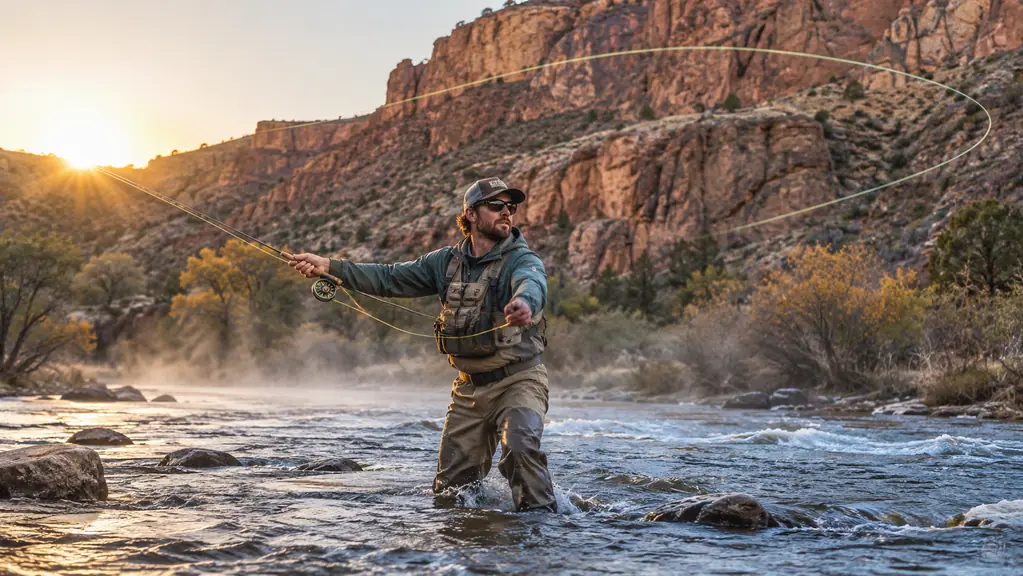
Nine feet in a medium power rod is the default for a reason. Long enough to mend line and hold it out of the current, short enough to cast tight against a juniper bank without snagging your back cast. Medium power means the rod loads with a normal casting stroke instead of demanding a fast one. It will not punish you for being rusty in April, which is more than I can say for some rods I have owned.
At 4.4 ounces, your shoulder still works at hour six
The rod weighs 4.4 ounces, built from IM8 graphite. I spent twenty-five years holding tools out at arm's length for a living, and I can tell you that four ounces repeated eight hundred times in a day turns into a different number by afternoon. Light rods are not about the spec sheet. They are about whether you can still cast well on the last mile of the float.
A cork grip beats foam with wet, cold hands
Grip type is cork. Cork gets tacky when it is wet. Foam gets slick, and a fly rod is a tool you grip with wet hands in forty-degree weather. Cork also wears into the shape of your hand after a few seasons, which is either a feature or plain sentimentality depending on your disposition. I call it a feature, and I have never once replaced a cork grip with foam on purpose.
The reel is ambidextrous, so there is no wrong-hand purchase
Hand orientation is ambidextrous. That line reads like catalog filler until you have bought a reel set up for the wrong hand and spent an evening on the kitchen table with a schematic and a small screwdriver. This one works either way out of the box. It is a small thing, and it is exactly the kind of small thing that ruins a Thursday.
One order, one box, 2.5 pounds on the porch
The complete kit weighs 2.5 pounds. One order, one tracking number, one return window if something is not right. Assemble it yourself and you own four separate orders, four shipping schedules, and four chances to buy the wrong thing and not find out until you are standing at the water. I have done it both ways. The single box wins, and it is not close.
What I'd Skip
Skip the extra fly line. The one in the box is a general purpose floating line, and a general purpose floating line is exactly what a beginning or returning angler needs. Also skip the spare spool, skip the upgrade reel, and skip the hundred-fly assortment you will not use for two seasons. Buy the kit, fish it, and let the river tell you what you actually need next.
Two honest limits. The floating line is a floater, so if you want to fish streamers deep on a sinking line you will be buying a second line eventually. And the reel is a freshwater reel, so rinse it and dry it after every trip and it will outlast your interest in the sport. If you already own a 5-weight rod, none of this applies to you. Buy a line, not a kit.
The line was already on the reel, over the backing, with a leader tied on. That is one less thing to get wrong on a Saturday morning.
If you are going to own one fly rod, start with the matched one
The Wild Water combo is not the last rod you will buy. It is the one that gets you on the water this weekend without a shopping list, and that is worth more than the upgrade.
Amazon Check Today's Price on Amazon →