I bought the Wild Water Standard Fly Fishing Combo in late May because I wanted a spare rod behind the seat of the Tacoma, something a friend could use without me worrying about it. I fish the Deschutes, the Metolius and the Crooked most weeks, with a few high lakes in the Cascades when the snow finally lets go. A loaner rod gets treated worse than an owned one, so I decided to fish this one myself for a few months before I handed it to anybody. I tend to judge gear the way I judged parts on an airframe: does it fit, does it hold up, and does it fail in a way you can see coming.
The kit arrived as a complete package: a nine-foot, five-weight rod, a reel spooled with a weight-forward floating line, backing and a nine-foot 5X leader, plus nine flies, a fly box and a protective rod case. I have used it on trout water, on bass ponds and on one windy afternoon that made me question my judgment. What follows is what I found after a season of real use, not a parking lot cast.
The Quick Verdict
A complete five-weight kit that fishes better than a starter combo should, with a basic reel and a line you will eventually replace.
Amazon Check Today's Price →The Spare Rod That Became My Regular Rod
Nine feet, five weight, cork grip, and a full kit in the bag. It is the simplest way to get on the water this weekend.
Amazon See the Kit on Amazon →How I've Used It
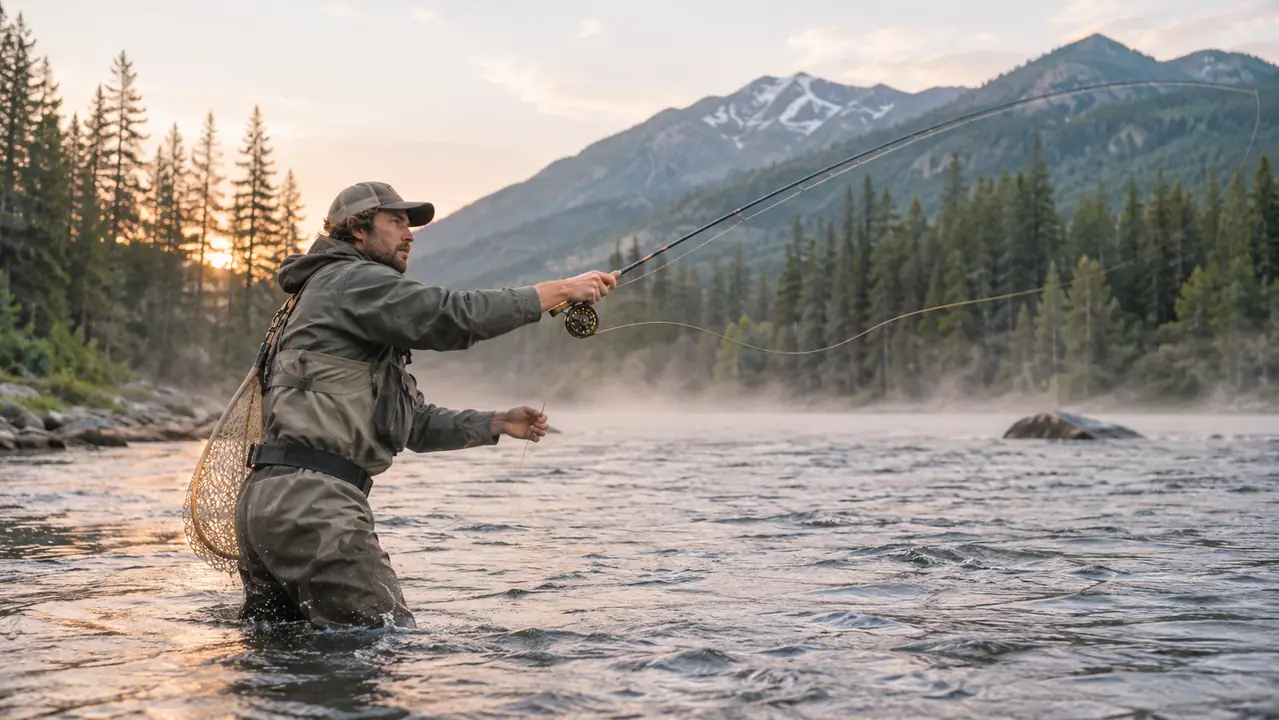
I have fished this rod on the Deschutes near Warm Springs, on the Metolius where you spend more time watching than casting, and on the Crooked River below Prineville. I also carried it into a couple of Cascade lakes in July. Most of that was trout water, though I did take it to a bass pond twice. I used the flies that came in the box first, then mixed in my own nymphs and a few small streamers. The rod has been cast in rain, wind, and one hailstorm that cut a trip short.
Most sessions were three or four hours, usually starting before the wind came up and ending when my shoulder told me to stop. I cast dry flies, dry droppers and small nymphs. I also spent one long morning practicing roll casts in a narrow channel where a back cast would have ended in the willows. The rod did everything a five weight should do in those places, and it never felt like a toy. Joanne came along on one trip and read in the camper while I fished the evening rise, which is her idea of a good deal.
I am not gentle on gear. The rod rode in the truck bed, got leaned against tailgates, and spent one afternoon in the cab while rain hammered the windshield. I rinsed the reel after every trip, dried the line when I remembered, and put the rod back in its case when I did not. That is normal use for me, not a torture test. The point was to see whether the kit would still feel like a tool after the new wore off.
I also let a friend who had never cast a fly rod use it for an hour on a gravel bar. He picked it up fast, which says something about the medium power and the nine-foot length. A rod that is too stiff makes a beginner fight it. This one did not. He was casting thirty feet by the end of the hour, and he was not muscling it. That is the kind of thing I look for in a kit that might get loaned out.
What the Nine-Foot Five Weight Does Well
The nine-foot length is the part I notice most. It gives you enough reach to mend line across a seam without wading deeper, and it keeps a dry fly off the water when you need a little clearance behind you. The five-weight line is heavy enough to turn over a small indicator rig but light enough that a size 12 ant still lands soft. If you fish mostly trout in rivers this size, that is the sweet spot.
The rod weighs 4.4 ounces, and it is built on an IM8 graphite blank with medium power. In plain terms, it bends enough to protect light tippet but has enough backbone to punch into a headwind when you time the cast. I would not call it a distance rod. I would call it a fishing rod, which is what I want from a kit like this. The medium power also makes it forgiving on the back cast, which matters when you are learning.
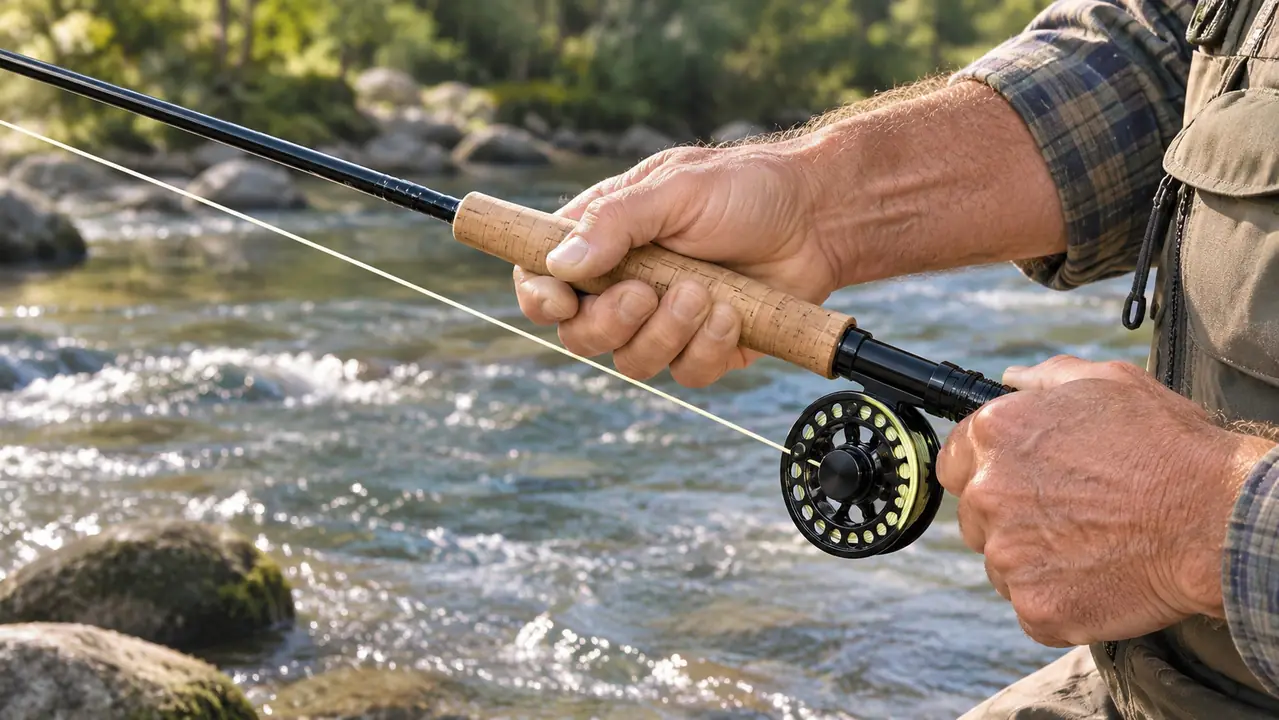
The cork grip is the detail that surprised me. It is comfortable in my hand for a full morning, and after months it has taken on the shape of my palm. The reel is listed as ambidextrous, and I switched it to left-hand retrieve without trouble. The whole package weighs 2.5 pounds in the bag, which is light enough to carry all day and heavy enough that I do not forget it is there. For a kit that comes as one box, the balance is better than I expected.
The Wild Water rod also handles a dry dropper without folding up. I fished a size 12 winged ant with a small bead head below it on the Crooked and could still mend line at forty feet. That is not a cast that wins contests. It is the cast that catches fish on a small river, and the rod does it well. It also roll casts a nymph under the alders when there is no room for anything else.
The Reel, the Line, and the Parts That Matter
The reel is the part of the kit I would call adequate. It holds the line, it winds without drama, and it has survived a season of being set down in gravel and rinsed in the river. It is not the reel you buy to impress anyone. The kit is built around the rod, and the reel is there to do a job. For trout and small bass, that job is mostly storing line and letting a fish run when it wants to.
The line that comes on the reel is a weight-forward five-weight floating line, with 20-pound backing behind it and a nine-foot 5X leader on the end. That is a sensible trout setup out of the box. The line casts well enough for a beginner to learn on, and it floats when you need it to. It also develops memory in cold mornings, and by the end of the season I could feel the difference between it and the line on my own reel.
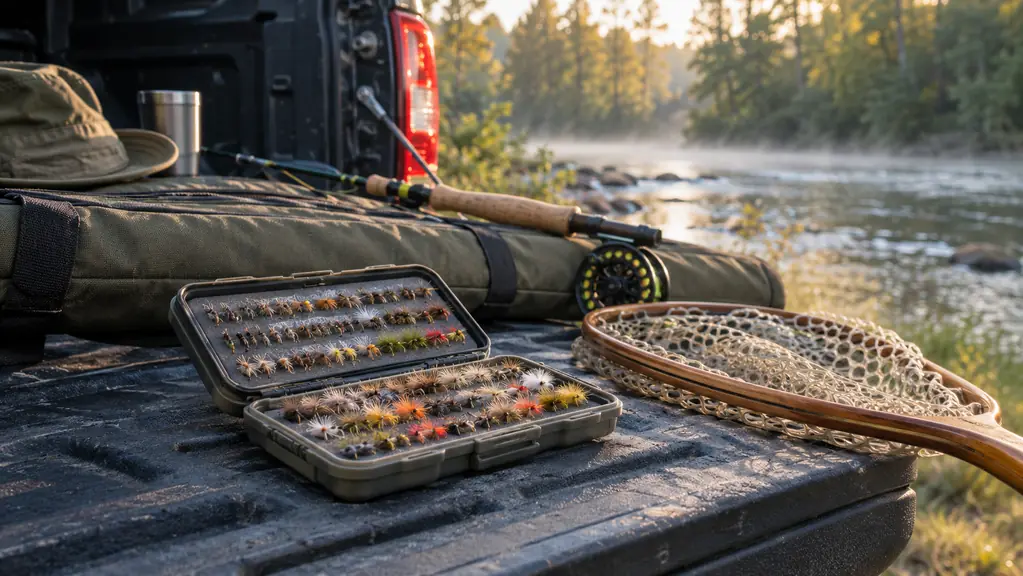
The nine flies in the box are a reasonable start. The kit lists three size 12 winged ants and three size 12 tungsten bead head nymphs, and I caught fish on both. The waterproof fly box has stayed dry in rain and in the bottom of a wet boat bag. The protective rod case is soft, but it does what a case needs to do in a truck. None of it feels like filler.
What I like about the complete kit is that it removes the small decisions that keep people off the water. You do not need to match a line to a rod or guess which leader to start with. The Wild Water kit has already made those choices. They are not the choices I would make after twenty-five years, but they are sensible choices for someone who wants to fish this weekend. The reel has enough line capacity for the five-weight line and backing, and the leader is already attached. You can be casting in the time it takes to rig a rod.
Where It Shows Its Limits
The biggest limitation is the line. A starter line is a starter line, and cold water makes it coil. I got used to stretching it before the first cast, and after that it behaved. If you fish more than a few times a season, a better line is the first upgrade I would make. The rod is good enough to notice the difference. On a thirty-five degree morning on the Metolius I spent more time straightening the line than fishing the first fifteen minutes. A line upgrade would fix most of that.
The reel is the second limitation. It is fine for trout, and it will handle a bass that runs, but it is not smooth enough that I would chase big fish with it. The kit is a five weight, so it is not the tool for heavy streamers or a windy day on a big river. I fished a size 6 streamer on it once and wished I had a heavier rod.
The rod case is another spot where the kit is honest about what it is. It protects the rod in the truck and in the closet. It is not a travel case, and I would not check it on a flight. The fly box is small enough for a jacket pocket, which is good, but it will not hold a full season of flies. None of these are deal breakers. They are the places where a complete kit makes a choice.
I also would not buy this as a heavy wind rod. A five weight is a five weight. On the Deschutes in a downstream blow I had to work harder than I would with a six. That is not a fault in the kit. It is the nature of the size. If most of your fishing is big water and big flies, this is the wrong tool, and no amount of line tuning will change that.
Months Later: What Held Up and What Didn't
After a season, the rod is the part that has held up best. The cork grip has worn in, the rod still casts true, and the blank has not developed a set. I have not been kind to it. It has been in the truck on hot days, in the rain, and in the back seat next to a wet wading boot more than once. It still casts the same as it did in June.
The line is the part that has aged most. It still floats, but it has picked up a set from being stored on the reel, and it does not shoot as well as it did when new. I will replace it before next spring. The reel has a little more play in the spool than it did, and the finish has the marks you would expect from a season on the water. It still works. It just does not feel new.
I did have one small issue. The reel came loose on the rod once after a long walk, and I tightened it and moved on. That is the kind of thing I check now before I start fishing. A kit at this level is not going to be perfect, and I would rather have a rod that fishes well and a reel that needs a look than the other way around. The rod is the reason I would buy this again.
The nine flies are mostly gone, lost to rocks and trees and one fish that took the ant into a logjam. That is what flies are for. The box and case are still in the truck, and I have used them with other rods. That tells you something about the kit: even the parts that are not the rod are useful. I would not buy the kit just for the box, but I would not throw it away either.
What I Liked
- Complete kit with rod, reel, line, backing, leader, flies, box and case
- Nine-foot five-weight is a versatile trout and small bass setup
- 4.4-ounce IM8 graphite rod with medium power and a cork grip
- Reel is ambidextrous and simple to switch
- Waterproof fly box and protective rod case are useful from day one
Where It Falls Short
- Starter line develops memory in cold weather
- Reel is basic and not the strong point of the kit
- Five weight is not the tool for heavy streamers or big water
- Soft rod case is not a travel case
- Fly selection is a start, not a full box
Twenty mornings, three rivers and a handful of high lakes later, the rod itself has never been the reason a fish did not get landed.
Who This Is For
This kit is for the person who wants to fish this weekend, not spend the winter building an outfit. If you are new to fly fishing, or you want a spare rod for friends and family, the Wild Water combo gets you on the water with one purchase. It is also a sensible truck rod for trout water and small bass ponds. The nine-foot five weight is the rod most people should learn on, and this one is light enough to carry all day. It also packs down into the case and lives behind the seat without taking over the cab.
Who Should Skip It
Skip it if you already own a good five weight and you are looking for an upgrade. This will feel like a spare, not a step up. Skip it if you chase steelhead, throw big streamers all day, or fish big windy rivers where a heavier rod is the right tool. And skip it if you are hard on reels and expect that part of the kit to last forever. The rod is the reason to buy this. The reel is the reason to have a backup plan. If you want one rod to do everything from bluegill to steelhead, this is not that rod, and no kit at this size can be.
The Kit I Would Hand a Friend
If you want one box that gets you fishing, this is it. The rod is the part worth owning. Check the current options and get on the water.
Amazon See the Kit on Amazon →