
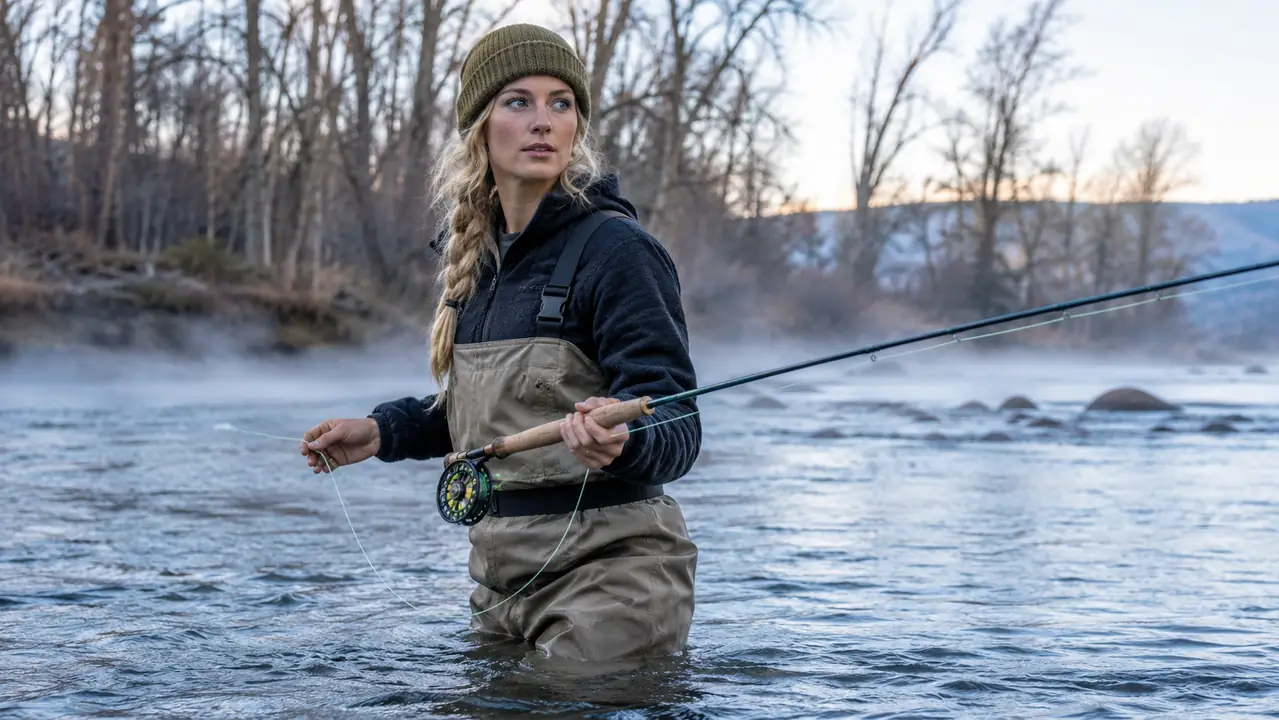
Cold trout water does not negotiate. You can be comfortable standing in it for six hours or miserable in it for twenty minutes, and the difference is not toughness. It is what you put on and the order you put it on in. I have waded the Deschutes in February and the Metolius in November for about twenty five years, and the one thing I have never once regretted is slowing down for the dressing part before my boots touch gravel. The fishing takes care of itself once you are dry and warm enough to pay attention to it.
The waders I keep coming back to for cold water are the FROGG TOGGS Hellbender chest waders in the stockingfoot version. They are not complicated. It is a nylon shell that weighs 3.1 pounds, it goes on with a pull-on closure, and it carries a one year manufacturer warranty. That is close to the whole spec sheet, and it is enough, because a wader has exactly one job: keep river water on the outside while you stand in it. Every step below is about helping it do that job, and about not asking it to do jobs it was never built for.
The shell between you and 38 degree water
FROGG TOGGS Hellbender stockingfoot chest waders. Nylon shell, 3.1 pounds, pull-on closure, one year manufacturer warranty. Check the current price and the size chart before your next cold water trip.
Amazon Check Today's Price on Amazon →Step 1: Dress for the air, not for the water
The most common way to get cold in waders has nothing to do with the river. It is the walk in. You dress for 38 degree water, you hike a quarter mile of bank in 45 degree air with a vest on, you sweat, and then you stand in a river inside a shell that holds everything in. Waterproof works in both directions. The moisture you made on the walk stays against your skin for the rest of the morning, and by ten o'clock you are colder than the guy who dressed lighter and got to the run slower than you did.
So layer light and layer right. A synthetic or merino base layer against the skin, never cotton, because cotton holds water and stops insulating the moment you start to sweat. Fleece pants over that, thin ones, not the heavy bibs you wear ice fishing. Then the waders, then a wading jacket if the air is genuinely cold. The jacket is worth having as its own piece of gear, because it is the layer you can take off and put back on without undressing on a gravel bar in front of two strangers.
Feet get their own plan. One thin liner sock against the skin and one midweight wool sock over it, and nothing cotton anywhere in the chain. Those are the exact socks you should be wearing when you check the fit in the next step, because the stocking foot of a wader does not change size but your foot does. A foot squeezed into two heavy socks is a cold foot by noon no matter how good the boot around it is.
One last thing about the walk in. Carry the jacket, do not wear it. If you are already warm and dry at the truck, you are overdressed for the hike, and the hike is where most of the damage gets done.
Step 2: Fit the stocking feet to your boots with the socks you will actually wear
Stockingfoot waders put a nylon sock inside your wading boot, so your wader size and your boot size are one decision, not two. Put the waders on with the liner sock and the wool sock, then slide into the boot. Your toe should just kiss the end. Your heel should not lift when you take a step. And there should be no wrinkle or bunch under your arch, because a wrinkle in a stocking foot is a rub, and a rub at 40 degrees turns into a blister you will feel for a week.
The FROGG TOGGS Hellbender is listed as a regular fit in a medium weight fabric with medium stretch, and that description is honest. It gives a little at the knee when you kneel in the shallows to release a fish. It does not size up for you. If you are between sizes and you plan to wear heavy wool from November on, take the larger one. If you truly cannot decide, order both and send one back, because that is cheaper than a whole season in waders that are one size tight.
While you have them on, run your thumb along the seam where the stocking foot meets the leg of the wader. On a good pair it is flat and even. If you feel a lump or a hard ridge, that is where it will let go in year two, and you want to find that out standing at the tailgate instead of standing mid river with the wind coming up.
Do the boot fit at home, not on the bank. Lace them up, walk up and down the hall, and pay attention to whether your toes have room when your foot slides forward. Cold feet start at a tight toe box, and no wader on earth can fix that.
Step 3: Put them on somewhere that is not gravel
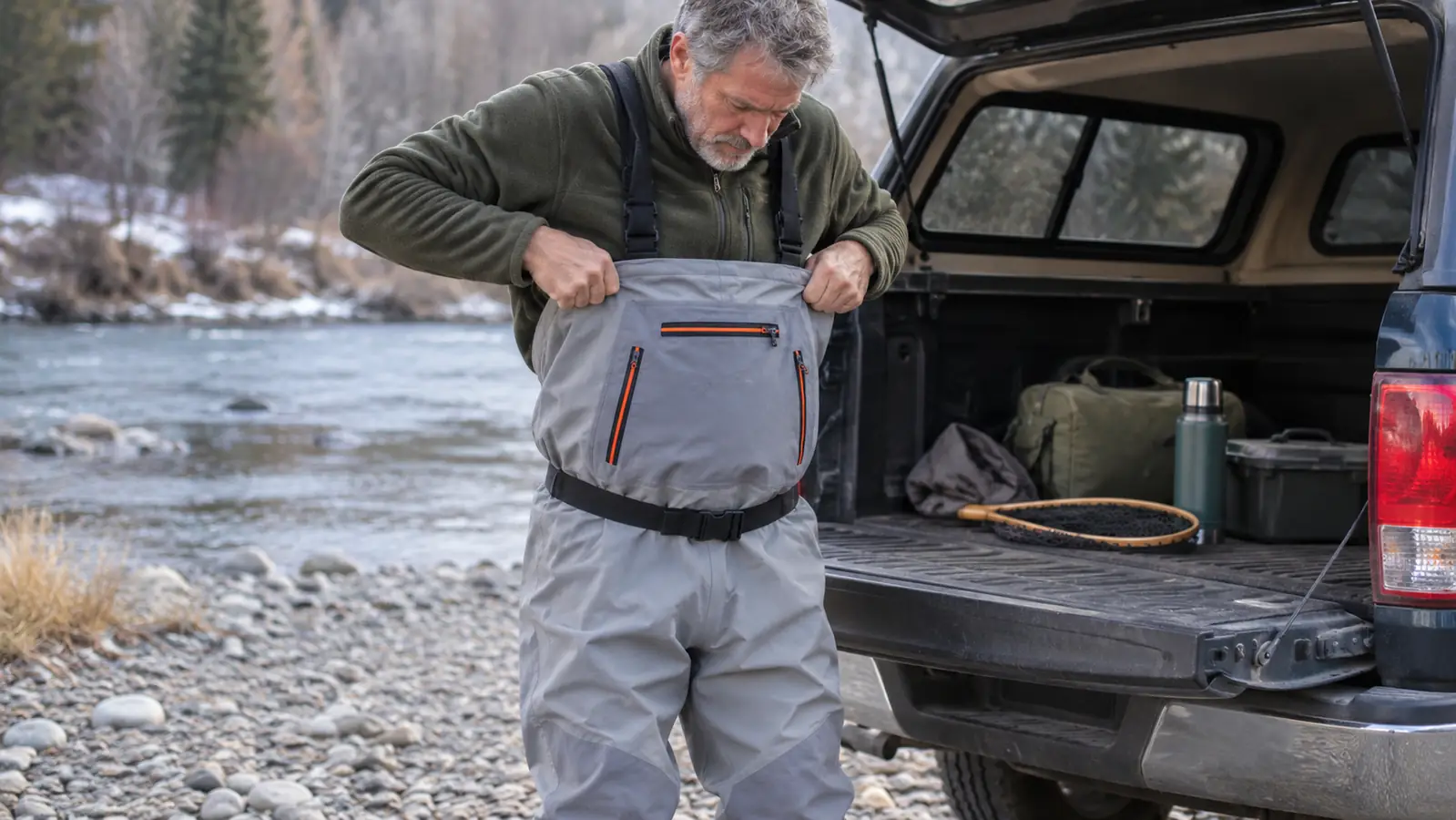
The pull-on closure is the reason I like this pattern. No zipper to fight with cold fingers, and no zipper to fail eight miles from the truck. The tradeoff is that getting in takes both hands and a little patience, and it should happen on a clean, flat surface.
I use the tailgate of my Tacoma with the canopy up. Lay the waders out, step in, and work the fabric up in stages. Work from the ankle up a few inches at a time instead of grabbing the waist and yanking. Yanking is how seams get stressed and how the stocking foot gets twisted, and a twisted stocking foot is a rub waiting to happen three hours later.
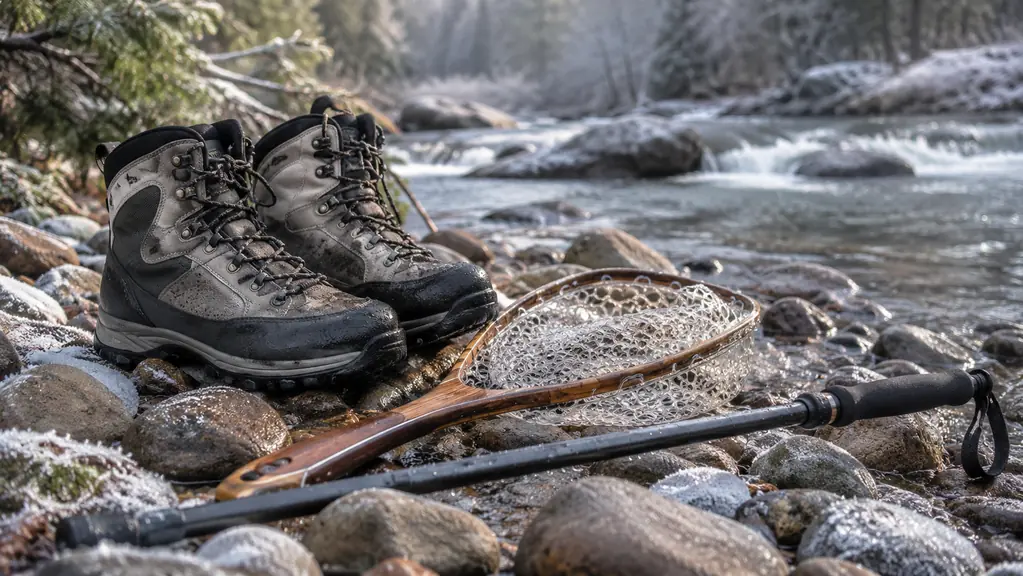
Never walk to the water in stocking feet. Gravel goes through nylon, and a pinhole in a stocking foot means a wet foot for the rest of the day. Carry the boots down or put them on at the truck. Then pull the gravel guards of the boots down over the top of the bootie and check that the junction is fully covered, because that overlap is the only thing keeping sand and grit out of your boot.
Then walk up to the crossing and look at it before you commit. Stand on the bank for a minute. Pick your line, pick your exit, find the rock you are going to aim for when you come back across in flat light. Most cold water trouble is a decision made in the first ten seconds of wading, not the fiftieth minute.
Waterproof works in both directions. The sweat from the walk in stays against your skin all morning.
Step 4: Manage the air inside the shell before you manage the river
A waterproof nylon shell does not breathe the way a softshell jacket does. Some moisture moves through it, but not fast, and the colder the water is, the slower it moves. Practically, that means your temperature control happens at the truck, not mid river. Get the layering right and the waders become invisible. Get it wrong and no amount of wading skill will rescue the morning.
When you are hiking in, vent the jacket and leave the waders alone. Walk slower than you want to. The twenty minutes you save hustling to the first run is twenty minutes you will spend standing in it, shivering, with your hands in your pockets instead of on the line.
In the water, the rule is depth plus current, not depth alone. Knee deep in a fast riffle pushes on you harder than thigh deep in a slow pool, and the riffle is where people get surprised. A wading belt of your own, cinched at the waist over the waders, will slow the fill if you go in. That is not a feature of these waders, it is just something you wear with them, and I would not step into cold water without one.
Cross below the riffle, angle downstream, take small steps, and keep your weight over your feet instead of out ahead of them. Chest waders full of water are a rescue, not an inconvenience, and the cold gets you before the current does.
Step 5: Drain, rinse, and dry them so the seams keep their tolerance
Come out of the river and drain the boots first, then the waders. Hang them by the feet so the water runs down and out instead of pooling in the stocking feet. Shade is better than sun. The hood of a truck is not a drying rack, and a closed truck box in July is worse.
The maker's care instruction is hand wash only, and I would follow it to the letter. Cool water, no detergent, no machine, no dryer. Rinse the silt off after every trip, because silt works into the weave and abrades it the same way grit works into a bearing. Hang them dry before you fold them, and fold them loose instead of creasing them hard into a stuff sack for the winter.
Check the stocking feet after every trip. Hold them up to a window and look for thin spots at the heel and the ball of the foot, which is where they go first. And keep the receipt in the truck file, because there is a one year manufacturer warranty and a warranty claim without a receipt is a conversation you lose at the counter.
For winter storage, wash them, dry them completely, and hang them in a closet instead of packing them into a hot shed. Heat and a hard crease in the same place for six months is how a good pair of waders turns into a leaky pair of waders without ever being worn.
What Else Helps
A wading staff. Not a fashion item. On a cold morning the rocks are greased and your legs are slow to react, and the staff is the difference between a stumble you laugh about and a swim you do not.
Wool on your head and hands. You lose heat off your head faster than anywhere else, and cold hands make you fumble knots and drop forceps into a foot of water. Carry two pairs of gloves, a thin pair for tying on and a thick pair for walking.
Fish the water you can actually reach. Cold trout sit in the slower, deeper seams and they do not chase. There is no prize for wading to the far bank in February. Knee deep with a clean drift beats chest deep with a bad one every time.
And know the difference between cold and dangerous. If the flow is up, if there is shelf ice on the inside bend, if you cannot see the bottom of your next step, stay on the bank and fish the soft water at your feet. Gear keeps you dry. Judgment keeps you alive. I have turned around on the Metolius more than once and never once regretted the drive home.
Knee deep in a fast riffle pushes on you harder than thigh deep in a slow pool. The riffle is where people get surprised.
Cold water rewards the guy who dressed at the truck
FROGG TOGGS Hellbender stockingfoot chest waders. Nylon shell, 3.1 pounds, pull-on closure, one year manufacturer warranty, hand wash and hang dry. Check the current price and the sizes before the season turns.
Amazon Check Today's Price on Amazon →