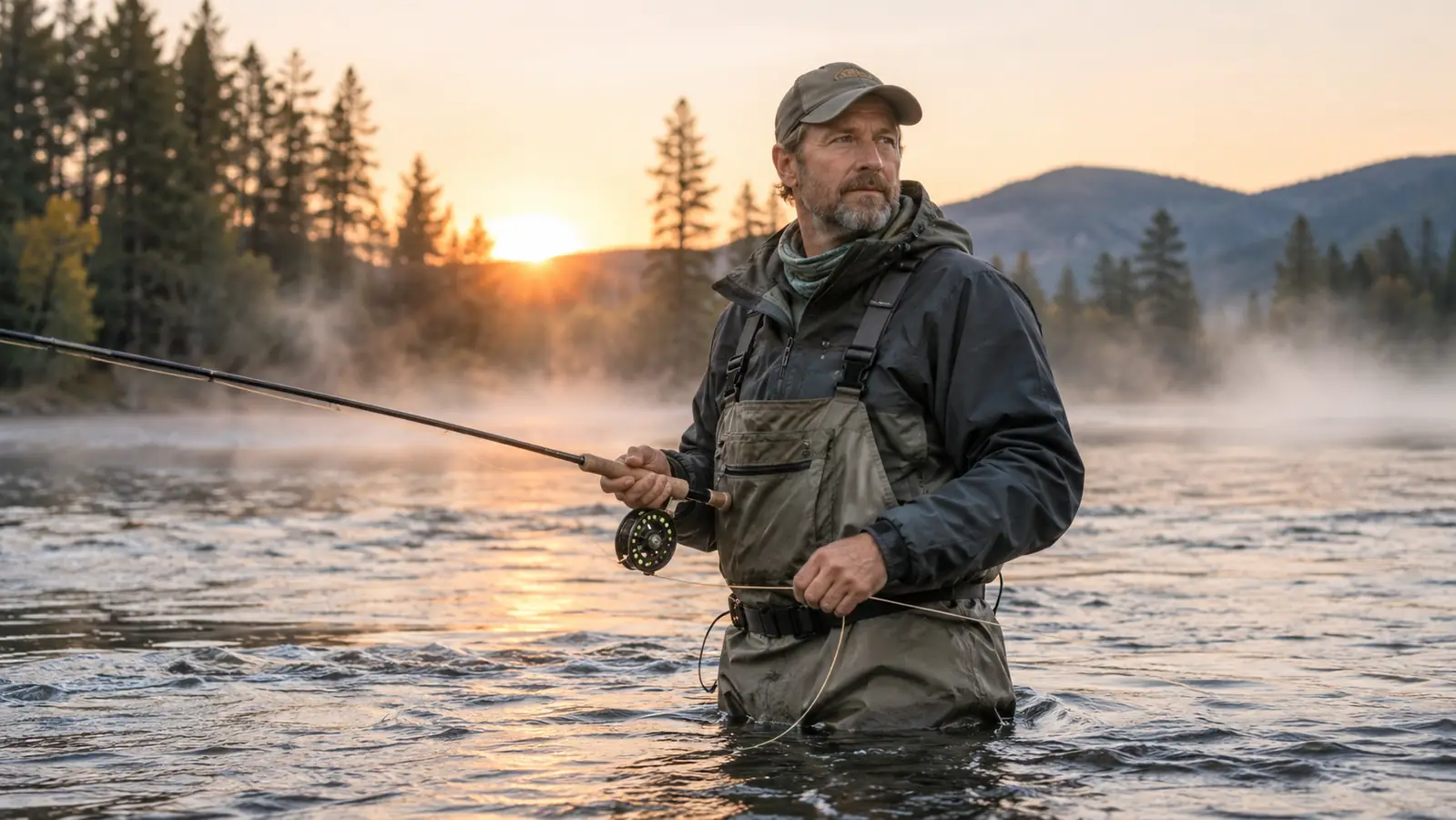
Every spring I watch the same thing happen on the Deschutes. A guy wades up to a rising fish, flips open a box the size of a paperback, and stares into three hundred flies that all look identical from twelve inches away. Then he ties on whatever is on top, casts, drags it, and the fish quits rising. He blames the fly. The fly was probably fine. He never actually looked at what the fish was eating.
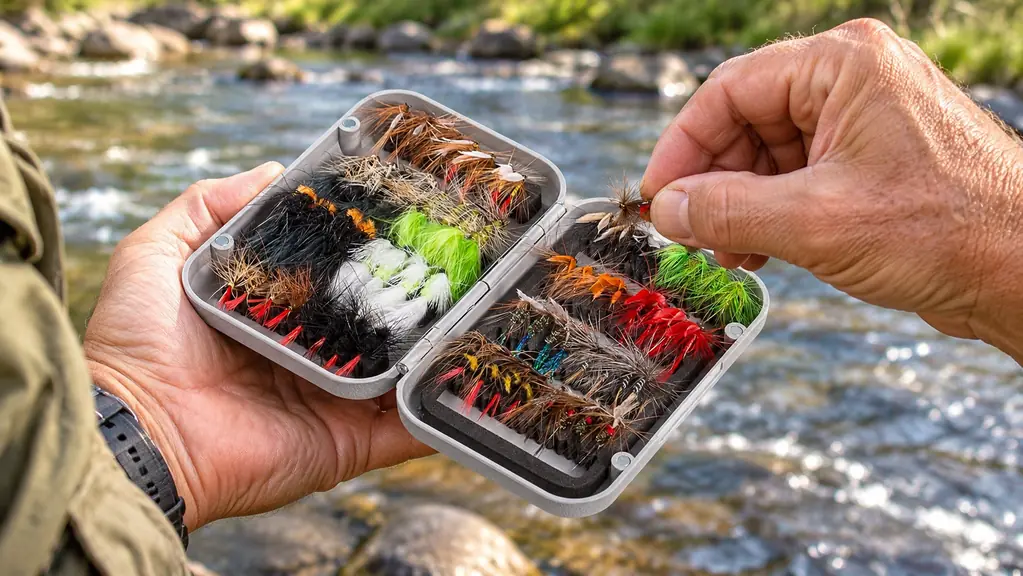
Matching the hatch does not mean owning every pattern in the catalog. It means reading the water, figuring out what is on it, and picking the closest thing you already carry. That is a skill, and it costs nothing. The BASSDASH 64pcs Fly Fishing Flies Kit gives you a reasonable spread to practice it with, because it packs mayfly dries, caddis dries, streamers, leeches, wet flies and terrestrials into one 3.94 x 2.76 inch box with a magnetic fastener that opens one-handed while you are standing in current. What it does not do is tell you which one to tie on. That part is on you, so here is the order I work in.
Sixty-four patterns that cover the hatches you will actually see
Mayfly dries, caddis dries, streamers, leeches, wet flies and terrestrials in one small box that opens with a magnetic fastener. Enough range to test a real hatch instead of guessing at it.
Amazon Check Today's Price on Amazon →The Five Steps, in Order
Step 1: Sit on the bank and watch the rise for ten minutes
This is the step everybody skips, and it is the only one that costs nothing. Before I open anything, I find a rock, sit down, and watch. Not the water in general. One fish, or one seam, until I can predict when the next rise is going to happen. When you can call the rise before it happens, you know the fish is on a rhythm and you know roughly where in the column it is feeding.
The shape of the rise tells you most of what you need. A quiet sipping rise, a dimple with no splash, usually means the fish is taking something small and flush in the surface film, often a spent spinner or a midge. A splashy rolling rise where you see the back and the tail usually means a fish chasing an emerging caddis or a mayfly trying to get off the water. A fish that boils and shoves water around is not eating on top at all, and you should stop casting dries at it.
The other thing to watch for is the insect itself. If you see naturals drifting through a sunbeam, try to catch one. A small aquarium net or a scrap of fine mesh works, and so does a hand cupped under a drifting natural. Failing that, get low and close and look at the size and the wing shape. Once you know that, the box turns into a short list instead of a wall of feathers.
Give it a real ten minutes, too, not the ninety seconds most people manage. Last June on the Crooked I sat on a cutbank from about 7:40 to 7:50 in the evening and counted eleven rises in a single lane about twenty feet out. The first four came at almost identical intervals, then a gap, then seven more in a burst. That gap told me more than any of the rises did. Something was moving the fish off the feed and then letting them back on, and when I finally waded in I fished that burst window instead of the whole evening. Two fish, both on the same drift, both in the second burst. If I had walked in at 7:41 I would have flogged the same water until dark and called it a slow night.
Step 2: Match the size before you match anything else
Size is the first thing a trout checks, and it is the first thing anglers get wrong. A fish that has been eating size 16 mayflies for an hour will refuse a size 12 that is otherwise perfect. It will often take a size 16 with the wrong tone and the wrong wing before it takes the right pattern one size too big.
Learn your hook sizes and learn to eyeball them. A size 16 dry is roughly the length of a grain of rice. A size 12 is about twice that. When you catch a natural, hold it next to the fly you are considering. If the fly is noticeably bigger, step down a size. If you cannot catch a natural, look at the rise again and guess small. Small gets refused less often than big does.
The BASSDASH kit spreads across several pattern families, and the listing lays out the individual patterns and sizes in the photos, so you can see what you are getting before it arrives. Having more than one size of the same idea is what lets you step down when a fish refuses. My hand-built boxes are all weighted toward the sizes I fish most, which means the day the fish want something one size off, I have nothing to give them. An assortment keeps options in sizes I would never have bought on my own.
I learned this the expensive way on the Metolius about eight years back. Pale morning duns were coming off and I had exactly one box with me, all of it size 14, because size 14 had worked the previous three trips. The fish were on something a full size smaller and they would not touch mine. I tried dragging it, I tried fishing it wet, I tried switching tone twice. What I needed was the same fly in a 16 and I did not have one, and the truck was a mile and a half of bank walking behind me. I have carried a spread of sizes ever since, and I no longer decide in advance which one size the river is going to want that day.
Step 3: Match the profile and the stage of the insect
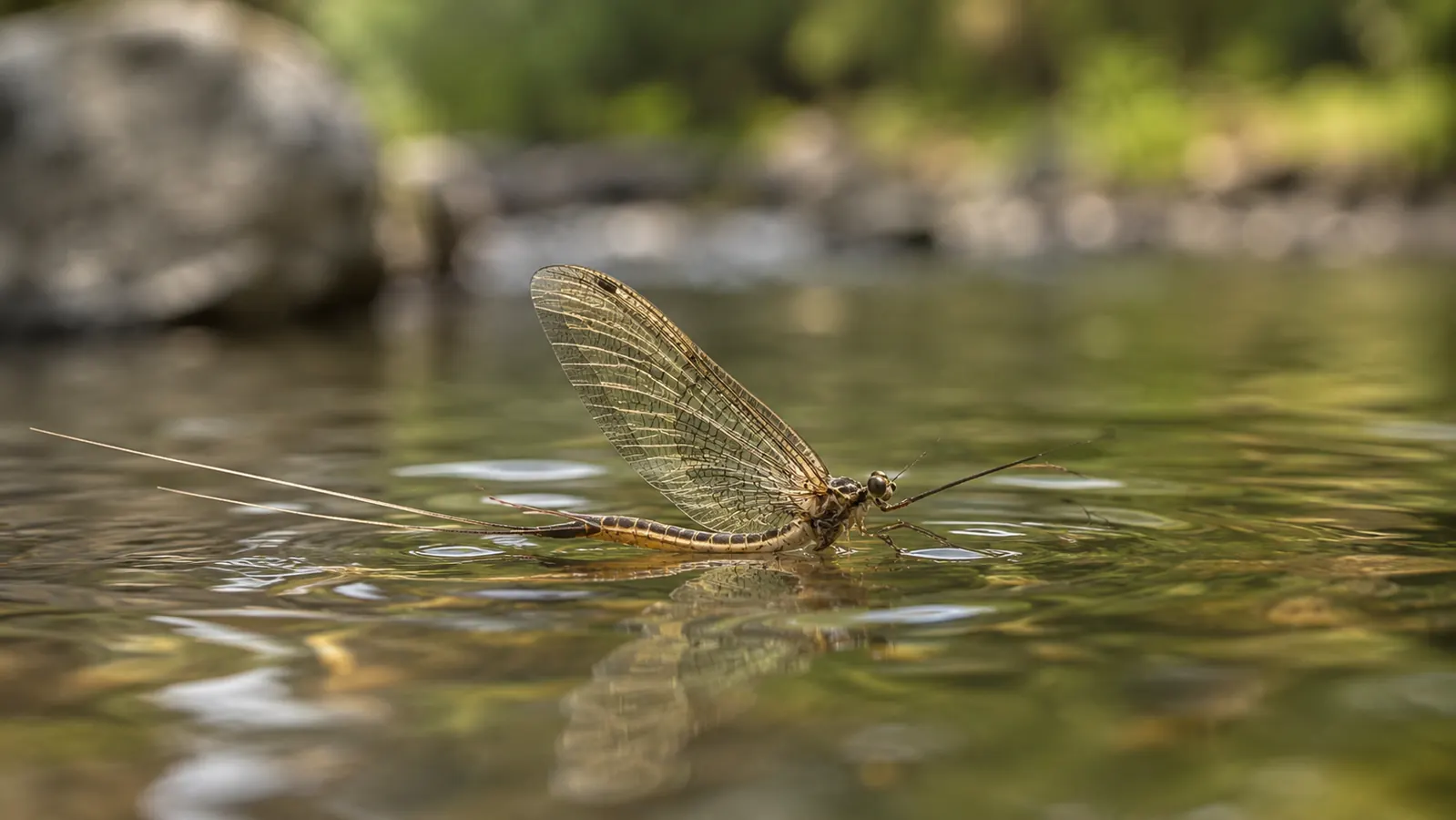
Once the size is right, silhouette decides it. An adult mayfly sits upright with its wings in a sail. A caddis sits low and tent-shaped with the wings folded back over the body. A stonefly is flat and wide. A spinner is dead, wings flat out to the sides, sitting flush in the film. Those are four different shapes, and no amount of tone matching fixes the wrong one.
Stage matters as much as species. Every mayfly spends months underwater as a nymph, struggles up through the column as an emerger, splits its shuck and floats as a dun, then molts again into a spinner and dies on the surface. A fish rising to emergers will mostly ignore a fully dressed dun, because what it is eating is still stuck halfway out of the shuck. That is why a soft wet fly fished just under the film sometimes beats a perfect dry.
This is where a mixed box earns its keep. The BASSDASH assortment puts streamers and leeches alongside the dries, and that matters on the days when nothing is up. If there is no hatch, you are not matching anything, you are covering water, and a small leech or a streamer is the right tool. Having both in the same box means you make that switch in thirty seconds instead of walking back to the truck.
The tell I look for is where the fish is when it shows. If I see just a mouth and a bit of nose, that fish is eating something riding flat and spent, and a spinner shape is right. If I see the dorsal and the tail break together and the fish comes up steep, it is chasing something that is getting away, and a low tent-shaped caddis or a struggling emerger is the better guess. On the Deschutes in late May, that distinction is worth maybe four fish in an evening, because the caddis and the mayflies overlap for about two weeks and both are on the water at once. Watch the rise angle and you will know which one the fish committed to.
Step 4: Worry about tone last, and only a little
Anglers overrate color. Trout are not reading paint chips, and light underwater changes everything anyway. What they key on is contrast: a dark fly against a bright sky, a pale fly against dark water, a bit of flash where the natural has a shimmery wing.
My rule is to match the general tone and stop. Cream, tan, olive, brown, black. If the naturals I saw were pale olive, I fish pale olive and I do not agonize over which shade. If I cannot tell, I default to something with natural dubbing and a few turns of brown feather that read as legs, because legs are a trigger and most impressions of legs are close enough.
The one time tone earns its keep is bright, flat, sunny water where fish get a long look at the fly. Then something two shades too dark stands out badly. On broken water and in low light, tone is all that matters and I would rather spend the remaining time on a better drift.
I have also stopped carrying six shades of the same pattern to solve this. What I carry now is one or two of each and I spend the saved space on tippet and floatant, because a fish that refuses your fly on tone is usually a fish you spooked on the cast anyway. Fix the approach and the shade problem mostly evaporates.
A fish that has been eating size 16 mayflies for an hour will refuse a size 12 that is otherwise perfect. Size first. Always size first.
Step 5: Match the drift, then change flies on a schedule
You can have the exact right fly and catch nothing if it drags. A natural mayfly rides the current at the speed of the surface film with its wings up. Your fly, tied to a line, wants to skate. Fixing that is most of the game: reach casts, slack in the leader, a mend upstream the second the line lands. If a fish rises beside your fly and refuses, assume drag before you assume the pattern is wrong.
The other half of this step is discipline about changing flies. Most people change too fast, then change too slow, and never in any kind of order. Mine is simple. Five or six clean drifts with a good presentation and no response, and I change something. Size first, then profile, then tone. I do not change all three at once, because then I learn nothing about which one mattered.
I keep a small notebook in the Tacoma and write down what I saw, what I fished, and what worked. Twenty-five years of that and I still get surprised, but I get surprised less. The notebook also tells me which patterns I actually use, which is the honest answer to whether a big assortment is worth carrying. Mine gets used, and the ones I never touch tell me what to stop buying.
One more thing on drag, because it is where I lose the most fish. On a cross-current, a reach cast buys me maybe four extra feet of clean drift before the line starts to swing. That is often enough, and it is never enough on the wide water. When the reach stops working I walk, even fifteen feet, to change the angle rather than add more mends. Two clean drifts from a better angle beat ten pretty ones from a bad one, and I have to remind myself of that roughly every trip.
What Else Helps
A few small things make the five steps easier. Polarized sunglasses, because you cannot match what you cannot see. Floatant for the dries and a little desiccant for the ones that get slimed and stop floating. A nipper and forceps on a lanyard so you are not digging through a vest with cold hands. A spool of 5X tippet covers most of the dry fly work on the rivers I fish.
A small seine net is the best purchase for anybody learning to match the hatch, and almost nobody owns one. Hold it in the current for thirty seconds, lift it, and look at what is in it. That is the whole hatch in your hand, in the size and tone you need. Do that three times in an evening and most of the guessing stops.
Keep the box sorted, too. The BASSDASH flies arrive loaded in the box, which is fine to start with, but after a few trips your favorites end up on top and everything else is buried. I sort mine by family, dries in one compartment and wets and streamers in another, and I rotate whatever I used last to the back so I stop reaching for the same three patterns out of habit.
Stop guessing at the box. Start with a spread that covers the hatch.
64 flies across mayfly dries, caddis dries, streamers, leeches, wet flies and terrestrials, in a box that fits a jacket pocket. Rated 4.6 stars by more than 3,300 anglers.
Amazon Check Today's Price on Amazon →