Almost nobody quits fly fishing because the fish beat them. They quit because the line landed in a pile at their feet, the leader wound itself into a spiral, and the rod felt like it was working against them instead of for them. I have watched that happen on the Deschutes more times than I can count, usually about forty minutes into an afternoon that started with a lot of enthusiasm and a new outfit.
The fix is not more muscle and it is not a fancier rod. It is a rod matched to a line, and a set of habits built in the right order. The Wild Water Standard combo is what I put in a beginner's hands most often, mostly because of what comes in the box: a 9-foot, 5-weight IM8 graphite rod that weighs 4.4 ounces, a reel already spooled with a WF5-F floating line and 20 pound backing, a 9-foot 5X leader, nine flies in a waterproof box, and a protective rod case. Nothing to match up at the counter, nothing to assemble. You can be casting twenty minutes after you open it.
Get the Rod and the Line Already Matched Before You Learn a Single Cast
The Wild Water Standard combo arrives with the 5-weight floating line on the reel and a 9-foot 5X leader attached. That removes the step beginners get wrong more often than any other.
Amazon Check Today's Price on Amazon →Here is the order I teach it in. Five steps, and I would not skip any of them, including the ones that feel too basic to matter.
Step 1: Rig It on Grass, Not on the Water
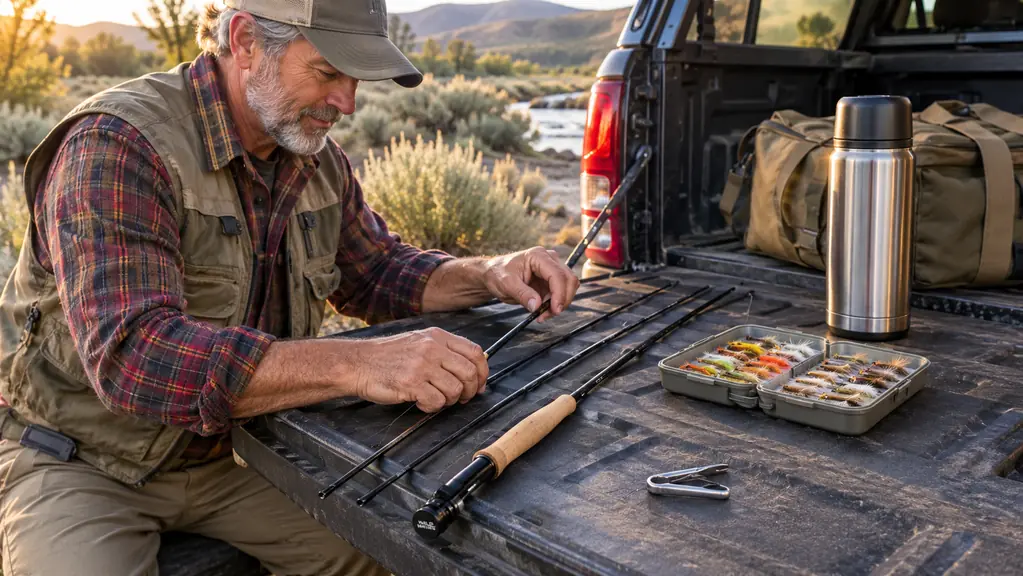
I check a new rod the way I used to check a torque wrench after calibration. Does it come assembled to spec, and does everything move the way it should. Lay the whole outfit out in the yard. Seat the ferrules firmly, line up the guides, and snug the reel into the seat. Run the line through every guide, including the stripping guide closest to the cork grip, which is the one people forget. Then tie something on the end.
That last detail matters. A bare hook on a lawn grabs everything within reach, and a hook in the back of your own head ends the lesson. Bend the point down or tie on a small tuft of yarn, which casts the same and catches nothing but air.
A ferrule that is not fully seated is the most common way a graphite rod breaks, and it always breaks at the female end, the part you cannot repair. Seat each joint with a firm push and a quarter turn, then look at the gap. If you can see daylight the width of a fingernail, it is not seated, and the first hard forward cast will finish the job for you.
While you are out there, look at the leader. The 9-foot 5X that ships with the Wild Water outfit is a sensible all-around choice for clear water trout. Run it through your fingers. If it took a set in the package, stretch it gently between both hands. A leader with memory in it lands in a corkscrew no matter how well you cast, and the caster usually gets the blame.
Step 2: Learn the Load With About 25 Feet of Line
Strip out roughly 25 feet of line past the rod tip and lay it straight in front of you. Not 50, not 15. Twenty-five feet is where a 9-foot 5-weight starts to carry enough line weight for you to feel what the rod is doing. Below that you are swinging a stick. Above that you are managing slack before you have learned to manage anything.
I measured 25 feet once with a tape and set two chunks of firewood on the lawn that far apart. Now I do not need the tape, and neither will you after a couple of sessions. Be fussy about it at first. A beginner who strips out 40 feet, fails to turn the line over, and concludes the rod is no good has not learned one useful thing about the rod. That is more line than a new hand can carry.
And if the line lands in a heap at 25 feet, the problem is the pause or the stop, not the distance. Drop back to 20 and get it landing clean before you lengthen again. Shortening the cast to fix a fault is not a step backward. It is how you find the fault.
The cast is not a throw. The rod is a spring, and you charge that spring with the weight of the line, not with your shoulder. Start with the tip low, lift the rod and stop at about the 10 o'clock position behind you. Pause. Then come forward and stop again at 2 o'clock. Your elbow is a hinge, the wrist stays quiet, and your thumb rides on top of the cork.
Most beginners try to power it. That is like forcing a wrench past its torque spec. You do not get a tighter bolt, you get a stripped one. The harder you push a fly rod, the wider and sloppier the loop gets. Let the line do the loading. Your hand only moves it back and forth.
Step 3: Fix the Pause Before You Fix Anything Else
If I could correct one fault in a new caster, it would be the forward cast starting before the back cast has straightened. The line needs time to unroll behind you. Start forward early and the rod tip runs into its own line, which produces the two failures every beginner recognizes: a loop that crosses itself in the air, and a knot in the leader that appears out of nowhere.
The count I use is simple. Back cast, say the word wait to yourself, then come forward. If the loop is still ugly, add a beat. There is no penalty for pausing too long on grass. There is a real penalty for it on a boat.
That wait is longer than it feels like it should be. With 25 feet of line out on a 9-foot rod it is about the time it takes to say the word at a normal speaking volume, not the clipped half-second most people give it. Say it out loud on the lawn a few times. You will feel the line come straight behind you through the cork grip, and that feeling is the thing you are actually buying with all this practice.
The second thing to check is the stop. The rod has to stop hard at the end of each stroke in both directions. A soft, drifting stop makes a wide open loop that will not turn a leader over. Stop the tip and let the line go. On a medium power graphite rod like this one, a crisp stop does most of the work for you.
Step 4: Add Line a Foot at a Time, Then Learn to Shoot It
Once 25 feet is landing straight and quiet, lengthen by a foot. Cast. If it still lands straight, add another foot. When it falls apart, drop back a foot and stay there a few minutes. That is the whole progression. It works because you are teaching your hand a feel, not memorizing a distance.
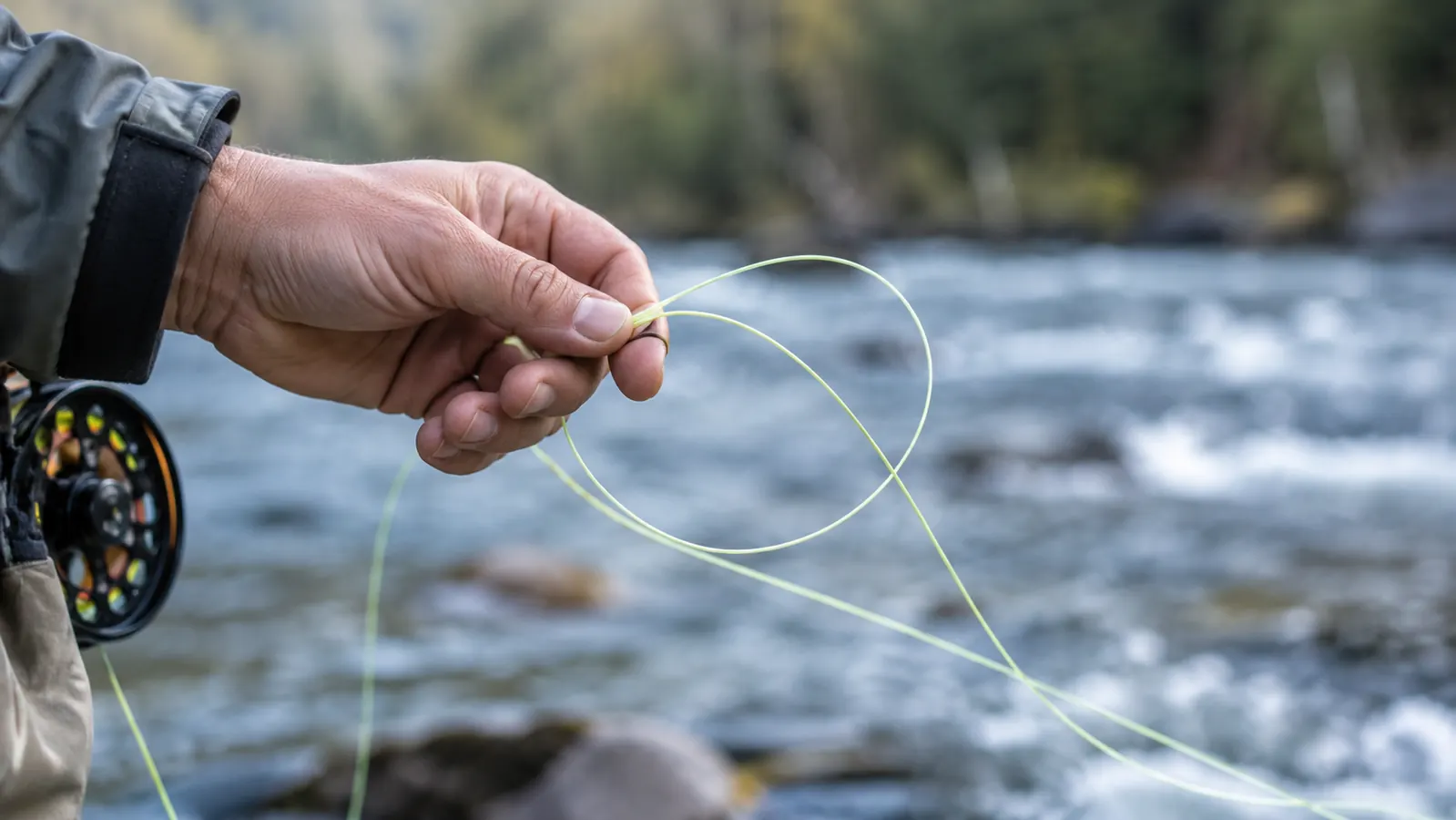
Shooting line is the payoff. False cast twice with the line under control, then on the final forward cast let the line slip through the fingers of your line hand as the rod straightens. Do not turn loose of it. Just relax your grip and let it feed. The rod does the shooting. Your hand only stops holding it back.
Keep that line hand low, around hip height, with the line pinched against the cork under your index finger. The pinch is your brake. Release it at the stop and not a moment before. Releasing early throws a wide loop and dumps the whole cast on the water in front of you. Releasing late and the line never leaves your hand at all, which looks like nothing is happening and feels like the rod quit on you.
On a calm evening I can add about 10 feet with a shoot and still lay it out straight. On a windy afternoon I do not bother trying. Ten feet of honest casting puts a fly over more fish than 40 feet of guessing, and I have proven that to myself on the Metolius more than once.
Two limits worth respecting. Do not try to shoot line into a headwind, because it will not work and you will blame the rod. And remember that the Wild Water rod is rated for a 5 weight line and ships with a matching WF5-F. If you want to throw a heavier line later, buy a heavier rod. Overloading a rod to reach farther is the fishing version of putting a bigger fuse in a circuit that keeps blowing.
Step 5: Take It to the River and Learn the Three Casts You Actually Need
On the water, distance is the least of your problems. The cast that catches fish most days is a roll cast, and it exists so you can put a fly on the water when there is brush or a bank behind you. Start with line on the water in front of you, lift the rod slowly to about 1 o'clock and hold, let the line load behind your hand, then bring the rod forward and stop. The line rolls out across the surface.
Cast two is a simple pick up and lay down, which is the overhead cast with less line and no false casting in between. Cast three is a mend. After the line lands, flip a small upstream curve into it so the fly drifts naturally instead of dragging. On the Crooked, where the water is clear and slow, the mend matters more than the cast that got you there.
Pick a stretch with room behind you the first time out. The Crooked below the dam has miles of open bank and slow water, and you can watch your line land and see exactly what it did wrong. A June morning down there taught me more about mending than a whole season of fishing tight water with alder at my back. When the line is visible on flat water, the correction is obvious, and obvious corrections stick.
Pick a light wind day for your first trip. The Deschutes in July will teach you humility fast, and casting in wind before you can cast in calm air is how people decide they are bad at this. A high lake in the Cascades in summer is forgiving water and short casts. The Metolius will humble you with fish you can see and cannot fool.
What Else Helps
Practice in short sessions. Fifteen minutes on the lawn three times a week beats one four-hour Saturday, and it beats it badly. Muscle memory responds to repetition spread out over days, which is the same reason I never learned a maintenance procedure by cramming it the night before.
Carry a spare leader. Tapered leaders take a set, and one kinked leader ruins an otherwise good cast. Nippers on a lanyard and a pair of hemostats cover most of what you need at the water. Keep the rod case in the truck, because a rod that lives loose in a truck bed eventually meets a cooler lid.
The nine flies in the box are a reasonable starting set, including Size 12 Black Winged Ants and Size 12 tungsten bead head nymphs, and that selection will catch trout on most Western rivers before you have learned what the hatches are. Fish them before you buy anything else.
Get one honest lesson or watch one good video before bad habits set in. The pause and the stop are the two things you cannot see yourself doing wrong. Somebody standing next to you can spot either one in about ten seconds.
Keep a short note of what you worked on. Three lines in a notebook is enough: what you practiced, for how long, and what fell apart. I started logging casting practice the same way I logged inspection items I could not afford to forget, and within a month the faults start showing up in patterns. You will see that your bad casts cluster at the end of a session, or on the very first one, and then you know what to fix.
A 9-foot 5-weight with a matching line starts to load at about 25 feet. That is why it teaches well, and why you should stop trying to muscle it past 40.
The Cast Is the Skill. The Rod Should Not Be the Obstacle.
The Wild Water Standard combo gives you a matched 9-foot 5-weight rod, floating line, backing, leader and nine flies in one box, with a rod case to keep it honest between trips.
Amazon Check Today's Price on Amazon →