
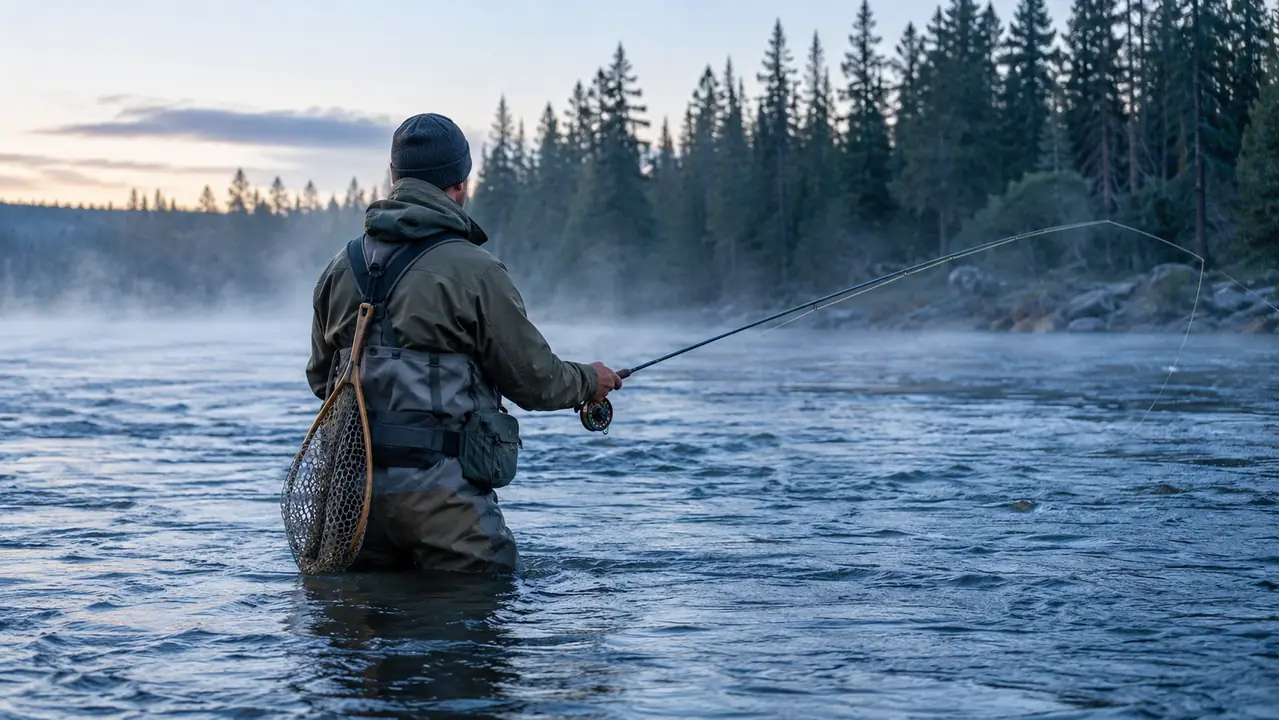
The FROGG TOGGS Hellbender does not feel like a wader when you lift it out of the box. It feels like a jacket. Thin nylon, quiet in the hands, light enough that I checked the packaging a second time to make sure both legs were in there. That one fact explains most of what you will read in the 2,201 reviews on this page. Anglers who wanted a piece of armor gave it three stars. Anglers who wanted something they could walk half a mile in gave it five. Neither group is wrong. They bought different products with the same name on the box.
I am Cal Merritt. I spent most of my working life as an aircraft maintenance technician, and I retired to Bend, Oregon, where I have been fly fishing for about 25 years. The Deschutes, the Metolius, the Crooked, and whatever high lakes in the Cascades are fishable in August. I judge gear the way I used to judge a part on an airframe. Does it fit. Does it hold tolerance. When it fails, does it fail in a way you can walk away from. I fish out of a 2011 Tacoma with a canopy and I sleep in it more nights a year than Joanne would prefer. I have had the FROGG TOGGS Hellbender through one full season, roughly 40 days on the water, and this is the honest version.
The Quick Verdict
A light, simple, pull-on stockingfoot wader that does a season of real work if you buy it for what it is. It is not armor, it does not breathe, and the whole thing depends on you getting the size right.
Amazon Check Today's Price →Buy it for the walk in, not for the armor. Here is today's price.
Three point one pounds, pull-on closure, 100 percent nylon, one year manufacturer warranty. If that short list matches the water you fish, check the current price and the current size chart before you commit.
Amazon Check Today's Price on Amazon →What the Spec Sheet Actually Says
The published attributes are short and unusually honest. Material, nylon. Fabric, 100 percent nylon. Weight, 3.1 pounds. Closure, pull-on. Fit, regular. Care, hand wash only. Warranty, one year manufacturer. Imported. That is the whole list, and I would rather work from a short list than a long one full of words that mean nothing. Nothing there promises breathability. Nothing there promises abrasion resistance. If you are expecting a wader with a membrane and a warranty measured in decades, this is not that, and the listing does not pretend it is.
Pull-on closure means exactly what it sounds like. You step in through the top and pull them up. There is no front closure to line up at five in the morning in a gravel parking lot with cold hands, which I count as a feature rather than a limitation. Fewer mechanisms is fewer things to fail. On an airframe, the parts that broke were almost never the simple ones. They were the ones with three moving pieces that all had to work at once.
Three point one pounds is the number worth circling. For a chest wader that is light. Light enough that it folds down into a package about the size of a sleeping bag liner and goes in the bottom of a daypack. I do not carry waders on my back often, but on the high lakes I do, and weight matters there more than it does on the Deschutes.
I weighed mine on the kitchen scale before the first trip, out of habit more than suspicion. Three point one pounds on the nose, dry, nothing in the pockets, canopy light still on in the garage. I weigh gear because a manufacturer's number is a claim and a scale is a fact, and this is one of the few times the claim held. The hand wash instruction I tested the slow way in June, in a plastic tub on the back patio, cold water, a capful of mild soap, about twenty minutes of an evening I will not get back.
The Sizing Question Nobody Answers Well
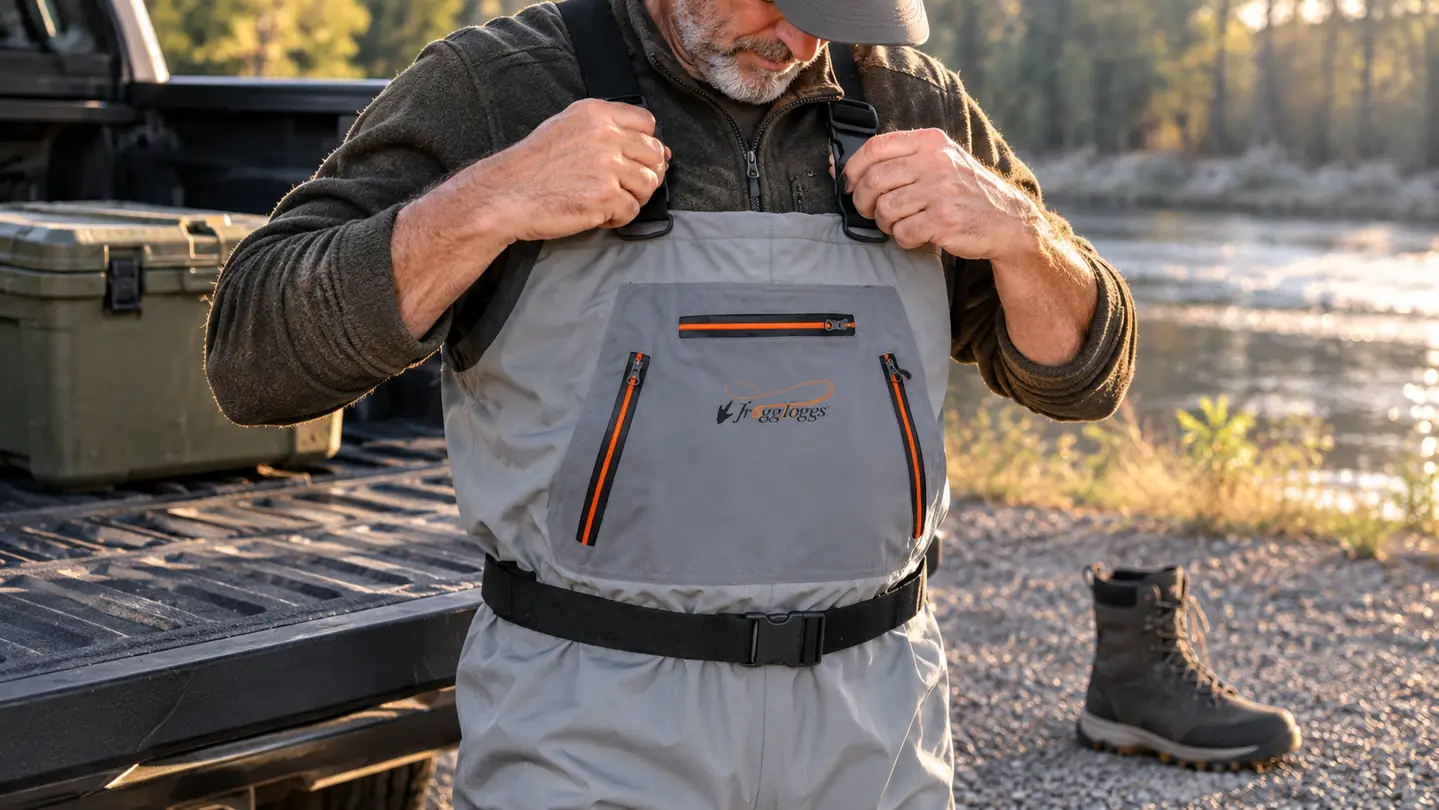
Stockingfoot waders are sized differently than bootfoot waders and nobody explains this well anywhere you look. With a bootfoot, the boot is part of the wader and the fit is mostly a boot decision. With a stockingfoot, the foot is a sock that goes inside a separate wading boot, so the fit has two jobs. The foot has to fit inside your boot without bunching. The body has to be loose enough to layer under and short enough that you are not hauling a yard of extra nylon through the current. Those two jobs pull in opposite directions, and the size chart is where you settle it.
My experience: the body came out roomy on me. I took that as correct rather than as a defect, because a wader that fits like a shirt is a wader you cannot layer under, and layering is half of why you wear one at all. Regular fit with medium stretch in the fabric means it moves with you instead of against you. But roomy in the middle and correct in the foot are two different measurements, and I would spend the time with the current size chart rather than guessing off your pants size.
If you land between sizes, this is not a product where sizing up is free. Extra length in a stockingfoot means extra fabric below the knee, and extra fabric below the knee catches water and drags on a long walk. I would rather be slightly tight across the shoulder than long in the leg.
For reference, I wear a ten and a half in a wading boot, and I went with the size the chart put me in rather than the size my jeans suggested, which are two different numbers and always have been. I measured my foot on a sheet of paper against the baseboard, wrote the number down in pencil, and ordered from that. When the box came I put them on over a pair of wool socks in the living room, stood on the carpet, and checked that the stocking foot was snug at the heel without a wrinkle across the instep. It was. If it had not been, the return would have happened before the tags came off.
The parts that broke on an airframe were almost never the simple ones. They were the ones with three moving pieces that all had to work at once. The Hellbender is a simple part.
How I've Used It
The first trip was the Crooked in March, which is a small tailwater and mostly a walking river. I put the waders on at the truck, walked a mile of bank, crossed twice, and took them off at the same truck six hours later. Nothing leaked. Nothing rubbed. The part I noticed was the walking. Three pounds and a loose cut means you are not fighting your own gear between holes, and on the Crooked you do a lot of walking between holes.
The Deschutes in October was the real test. Cold water, cold morning, a long push down a gravel bar, and a lot of standing still in current while my hands went numb. I had a base layer and a fleece underneath and the roominess paid off. I stayed warm because I could layer, not because the wader did anything clever. A wader is a barrier. It is not a heater. The Hellbender is a barrier with a little extra room in it, which is the right kind of barrier.
The Metolius in July was where the other side of the trade showed up. Air temperature in the high seventies, water in the fifties, and a two mile walk in. By the time I reached the first run I was damp on the inside. Not wet from the river. Damp from me. The listing makes no breathability claim and I am not going to invent one on the FROGG TOGGS behalf. Thin nylon at this weight does what thin nylon does.
There is one day in October I keep coming back to. I had pushed about a mile and a half down the gravel bar below camp and the wind came up the canyon hard enough that I had to turn my back to it to tie on a fly. I stood in the lee of a basalt shelf for maybe forty minutes waiting on a seam to give up a fish, and the wader never once felt like it was in the way. No cold spot at the knee. No water wicking up a leg. That is a low bar, and a surprising number of waders do not clear it.
Where It Earns Its Keep
The honest case for this wader is distance and simplicity. If your fishing involves walking, it is a good wader. It packs small, it weighs little, it goes on in a parking lot without a wrestling match, and it comes off just as fast at the end of the day when you are tired and the light is going. I have owned waders that felt better in the water and were a misery to get out of. That trade is real and it never shows up in the marketing.
The second case is the cost of entry into stockingfoot wading. If you have been fishing in rubber boots and jeans and you want to get properly into the river without committing to a piece of equipment that costs more than you want to spend, this is a sane first pair. You buy the wader, you buy boots, you go fishing. Nothing about that plan requires the wader to last a decade. It requires it to last long enough to teach you what you actually want next.
Where It Falls Short
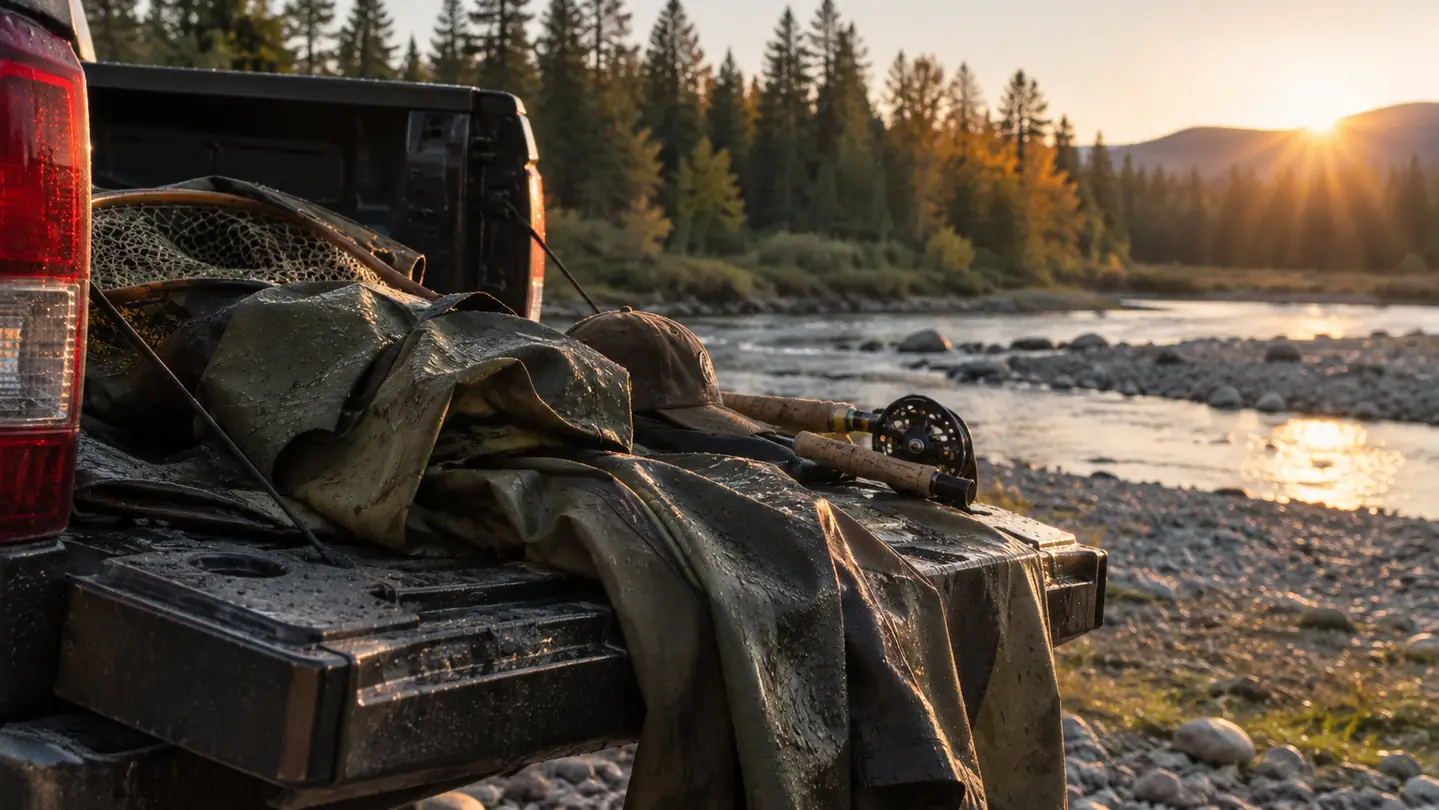
Durability is the honest weak point. One hundred percent nylon at this weight does not like sharp things, and the places I fish have sharp things. Lava rock on the Deschutes. Blackberry on the way down to the Crooked. The tailgate of a truck. I have not put a hole in mine, but I have been deliberate about it, and I know men who have. If you fish water with a lot of fence crossings or scramble through brush to reach the run, understand that you are asking thin nylon to do a job it was not built for.
Condensation is the second thing. On a warm day with a walk in it you will be damp inside. That is not a leak. It is your own sweat with nowhere to go. The fix is layering in fabrics that move moisture and taking the wader down at lunch, not buying a different wader. I would rather tell you that plainly than have you find it in July and blame the seams.
The third is care. Hand wash only is a real instruction, not a suggestion. Thin nylon and a washing machine agitator do not coexist. That means a tub, cold water, a mild soap, and hanging it to dry out of direct sun. It takes an evening. If you are the kind of person who throws gear in the back of the truck and deals with it in November, budget for the fact that this wader will not survive that treatment the way a heavier one might. If you want to see how it held up over a longer stretch, that is covered in the six month notes on this site.
The lava rock is the thing that actually worries me. On the Deschutes there are shelves of it that will take the skin off a shin if you go down, and I have gone down. What I do now is simple. I carry a patch kit behind the seat of the truck, the same way I carried safety wire on the job, and I look over the outside of both legs in good light before I fold them away. Two seasons of that habit, no hole yet. I would not promise you the same if you push through blackberry to reach the water.
What I Liked
- Light at three point one pounds, easy to walk in and easy to pack down
- Pull-on closure means nothing to line up or break at the truck
- Roomy enough to layer under in cold water
- A sensible first stockingfoot wader without a long commitment
- One year manufacturer warranty stated plainly in the specs
Where It Falls Short
- 100 percent nylon at this weight does not tolerate brush, wire or lava rock
- No breathability claim, and no breathability in practice on warm walks
- Hand wash only, which is an evening of work you have to plan around
- Sizing is your problem to solve, and the body runs roomy
- Damp inside from condensation on summer days
What the Reviews Are Actually Arguing About
A 4.1 average across 2,201 reviews is a specific shape. It is not a product people love and it is not a product people hate. It is a product that does exactly what one kind of angler wants and disappoints a different kind, and both of them write reviews. Read the threes and the fours rather than the fives. The fives are usually about weight and walking. The threes are usually about water coming through, and when you read closely, a good share of those are condensation or a size that put stress on a seam rather than a manufacturing defect.
That is the thing nobody tells you about this wader. Most of the complaints are fixable by the buyer and almost none of them are fixable by FROGG TOGGS. Get the size right. Layer properly. Stay out of the blackberry. Hand wash it. Do those four things and the wader behaves. Skip them and it will not, and the one star review writes itself.
Who This Is For
This is for the angler who walks. If your day involves a mile of bank, three crossings and a lot of getting in and out of the water, the weight and the simple closure are worth more than a membrane. It is for the person getting into stockingfoot wading for the first time who wants to learn what they like before spending serious money. It is for the summer and fall fisherman on rivers like the Crooked and the Metolius who wants a barrier and some room and does not need a piece of equipment that will outlive him. And it is for anyone who has ever been late to the water because they were losing a fight with a wader in a parking lot.
Who Should Skip It
Skip it if your water is sharp. Lava rock, wire, heavy brush, long scrambles. You want a heavier fabric and you should pay for it. Skip it if you run warm and fish through July and August with a walk in, because you will be wet inside and you will be irritated about it by ten in the morning. Skip it if you want one pair of waders to last ten years and you have no interest in an evening of hand washing every season. And skip it if you cannot be bothered to measure your foot and read the size chart, because this wader will punish a lazy guess harder than a bootfoot will. If you are weighing it against a well known alternative, the side by side breakdown lays out where each one actually wins.
One season in, I would buy it again for the water I fish. Read the size chart first.
Three point one pounds, 100 percent nylon, pull-on closure, regular fit, hand wash only, one year manufacturer warranty. Light, simple, and honest about what it is.
Amazon See Today's Price on Amazon →