
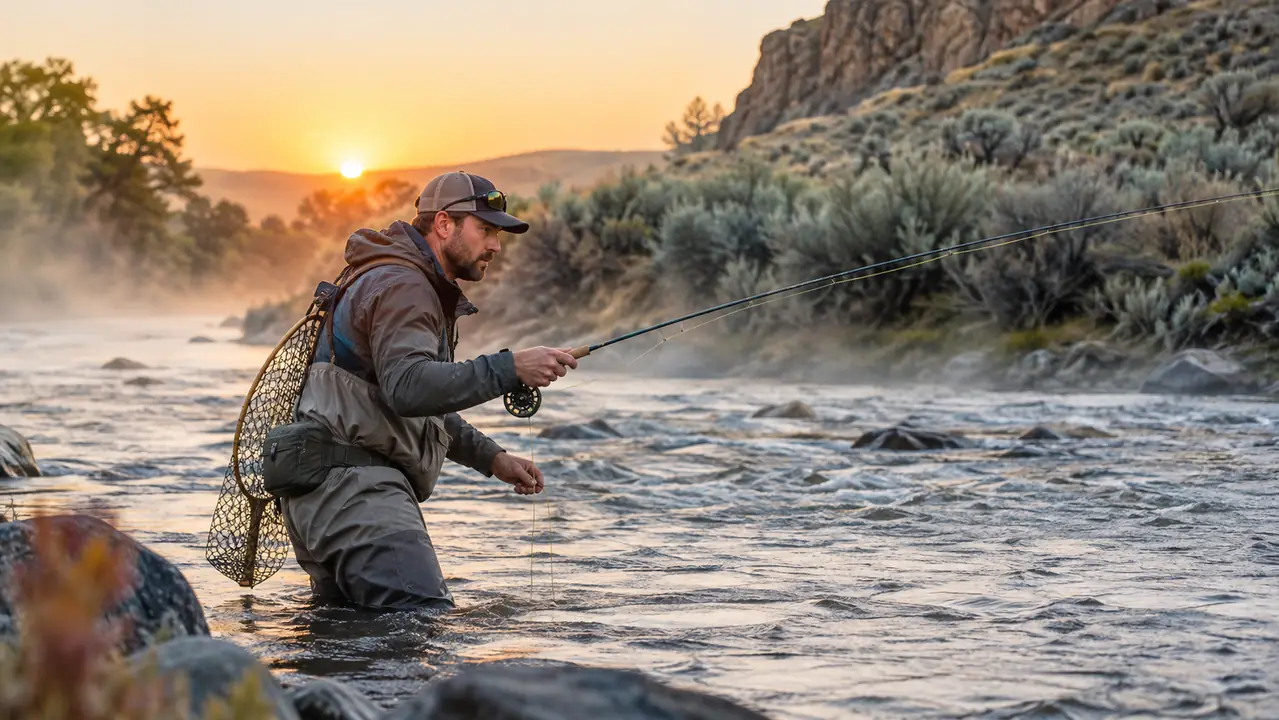
The Booms Fishing FF3 kit arrived on a Tuesday in March in a package that was flatter than I expected. Ten and a half inches by seven and three quarters, a hair over half an inch thick, a little over half a pound on the kitchen scale. Seven pieces, and almost none of it bulky. I have been fly fishing the Deschutes and the Metolius for about twenty five years, and I own a drawer full of small tools that looked clever under fluorescent light and turned out to be dead weight on the water. I opened this one expecting more of the same.
It is not more of the same. It is also not a kit where every single piece earns its place, and that gap is what this review is about. There are seven pieces in the Booms Fishing kit and I now use five of them regularly. The other two live in the truck console and come out maybe twice a season. Nobody puts that in a product listing, so I will.
The Quick Verdict
A genuinely useful kit built around a hemostat and a net release that both do their jobs. Not heirloom gear, and the seven pieces are not all equally worth carrying, but nothing in here is junk and the hemostat alone keeps it on my vest.
Amazon Check Today's Price →Seven Pieces, and One of Them Does Most of the Work
The 7.5 inch stainless hemostat is the reason this kit stays on my vest. The 6.6 pound net release and the five spool tippet holder are close behind it.
Amazon Check Today's Price on Amazon →What Is Actually in the Kit
Start with the parts list, because a tool kit lives or dies on whether the individual pieces are worth carrying. The listing names the pieces that matter: a 7.5 inch stainless steel hemostat, a magnetic net release rated at 6.6 pounds, and a tippet holder that carries up to five spools and attaches to a pack or vest with a carabiner. The product title also names a knot tool and a line clipper on a retractor. The aluminum bodies and the pack dimensions are the rest of what you need to know: 10.51 by 7.76 by 0.63 inches, 0.25 kg, which means the whole thing stows in a vest pocket or a glove box without a fight.
I want to be straight about the framing. Seven pieces sounds like more than it is. Two of them are small enough that you will forget which pocket they went into by the second trip. The three big names on that list, the hemostat, the net release and the tippet holder, are what you are actually buying. If those three did not work, the kit would be a novelty. They work.
There is a materials question underneath all of it. Aluminum is light, and light matters when the kit is riding on a vest for six hours in July. Aluminum is not tough the way steel is tough. It dents. I will get to that, and I will not pretend it is not a tradeoff, because it is.
The way I judge a tool comes out of a career of turning wrenches on airframes. Three questions. Does it fit the job. Does it hold tolerance. And when it fails, does it fail in a way that tells you, or does it fail quietly and take something else with it. A hemostat that slips without warning is worse than one that bends visibly. I try to run fishing gear through the same three questions, which is more useful than it sounds and probably makes me tiresome at the fly shop.
How I Have Used It
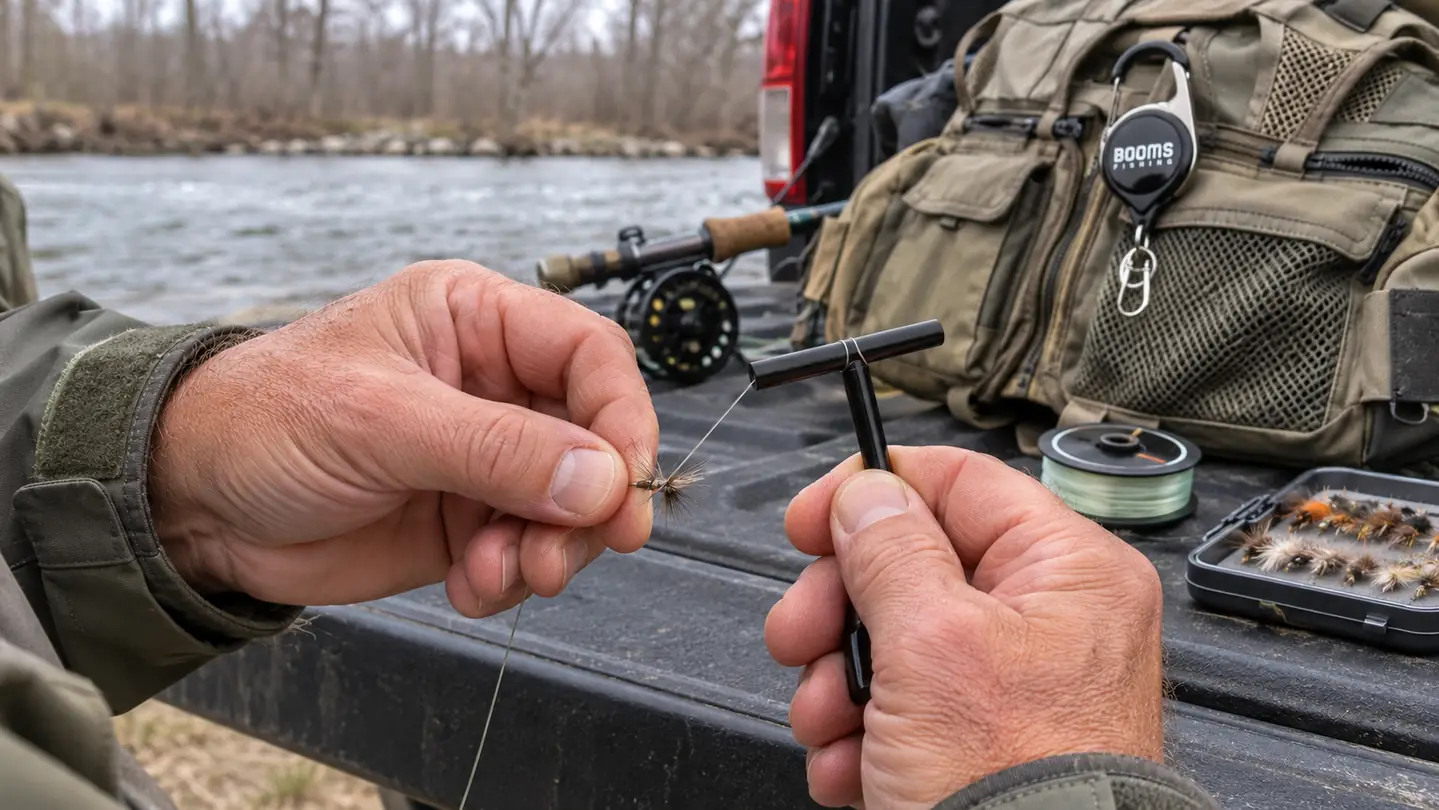
First trip out was the Crooked River in late March, water in the forties, fish stacked in the slow tailouts and not especially interested in anything I threw. I had the kit in my vest because I wanted to use it under real conditions rather than test it on the tailgate with dry hands and good light. I tied on a size 18 midge with numb fingers, used the hemostat to hold the fly while I cinched the knot, and mashed the barb without thinking about it. That last part is the actual test. A tool that makes you stop and think about it is a tool you stop carrying by June.
Second trip was the Deschutes in April, wading, faster water than I like when the rocks are still greasy. That is where the net release earned its spot. I had a rubber bag net on a short handle hanging off my vest instead of fighting the brush behind me. Netting a fish one handed in current while the net is doing its best to swim away from you is a specific kind of misery, and having it already in the water at the end of a short reach solves most of it.
Since then the kit has been on maybe fifteen trips, including three high lake days in the Cascades in July and August when I hiked in with a three weight and nothing else. On those trips the whole kit was worth carrying because it weighs next to nothing and covers the small failures that end a day early. A dulled point. A tippet spool that has gone missing in the bottom of a pack. A knot that wants a second pair of hands in cold weather. What it did not do is replace anything I already owned that was better.
One afternoon in May I fumbled the line clipper off my vest on the Metolius and the retractor pulled it back before it reached the water. That is not a heroic story. It is the entire reason a retractor exists, and it is the only time all season I was glad a piece of gear was attached to me.
The hemostat has mashed the barb on better than two hundred hooks since March and the jaws still close flat. That is most of the review, honestly.
The Hemostat Is the Reason to Buy This
A 7.5 inch hemostat is longer than the pocket sized ones sold as fishing tools, and the length is the point. When you are holding a fly while you tie a knot, longer jaws keep the hook away from your fingertips and give you a straight line to pull against. When you are getting a hook back out of a fish, that extra reach is the difference between a clean release and a fish that spends thirty seconds out of the water while you fumble. Booms Fishing got the length right, and that single decision is most of why I still carry this kit in September.
For years my go to was a pair of forceps from a hardware store that cost almost nothing and worked until it did not. The jaws drifted out of alignment after a couple of seasons and started slipping on small hooks without any warning at all. That is the quiet failure I mentioned. The hemostat in this kit has held alignment through a full season of wet hands and river water, and the stainless has not spotted. That is a low bar and it is exactly the bar that cheap tools fail.
I have not been gentle with it. Barbs mashed, hooks held while I dressed them, tippet ends gripped when my fingers were too cold to do it themselves. Nothing has bent. The joint still moves freely and there is no wobble in it yet, which is the thing I would expect to go first.
Where it is less than perfect: 7.5 inches does not drop into a shirt pocket. If you are the sort who keeps a tool in a chest pocket, this one rides at a long angle and you will feel it against your ribs. I moved mine to the vest and stopped noticing it by the second week.
What I Liked
- 7.5 inch stainless hemostat does the two jobs that matter, holding a fly while you tie and mashing barbs
- Net release rated at 6.6 pounds held a wet rubber bag net in fast Deschutes current
- Tippet holder carries up to five spools and attaches to a pack or vest with a carabiner
- Whole kit weighs 0.25 kg and packs flat at 10.51 by 7.76 by 0.63 inches
- Aluminum bodies keep it light enough that you forget it is on the vest
Where It Falls Short
- Five spools is a hard ceiling on the tippet holder. Carry more and you need a second one
- Aluminum dents. This kit is light, not armored
- Two of the seven pieces earn their place maybe twice a season
- A 6.6 pound magnet rating is holding force, not a guarantee against a heavy wet net and a bad snag
- Finished like a working kit, not like something you hand down
What Nobody Tells You About the Net Release
The magnet is rated at 6.6 pounds, and that number means something narrower than most people assume. It is holding force, not the weight of the fish you can land. A long handled net with a rubber bag, soaking wet, is heavier than it feels in the shop. Add the drag of a net swung through moving water and you are asking a fair amount of one magnet. Mine has held on the Deschutes and the Metolius with a wet bag and a decent rainbow in it. It has also let go when I caught it on a willow branch, which is what magnets do.
So here is the thing I would tell a friend at the tailgate. A magnetic release is a convenience, not a security system. It lets you carry a net where you will actually use it, and in exchange it can be separated from your vest by a branch, a truck door, or one bad step on slick rock. If losing a net would ruin your season, add a backup of some kind. That is not a knock on Booms Fishing. It is how magnets work, and no rating changes it.
What I like about this particular one is that the pull is honest. Some releases are so strong you need two hands and a short prayer to get the net off, which defeats the whole idea when a fish is running. This one separates when you pull it and reseats when you push it back, one handed, every time. That sounds like the minimum and it is apparently not, because I have used releases that made me stop carrying a net at all.
The Tippet Holder and the Small Pieces
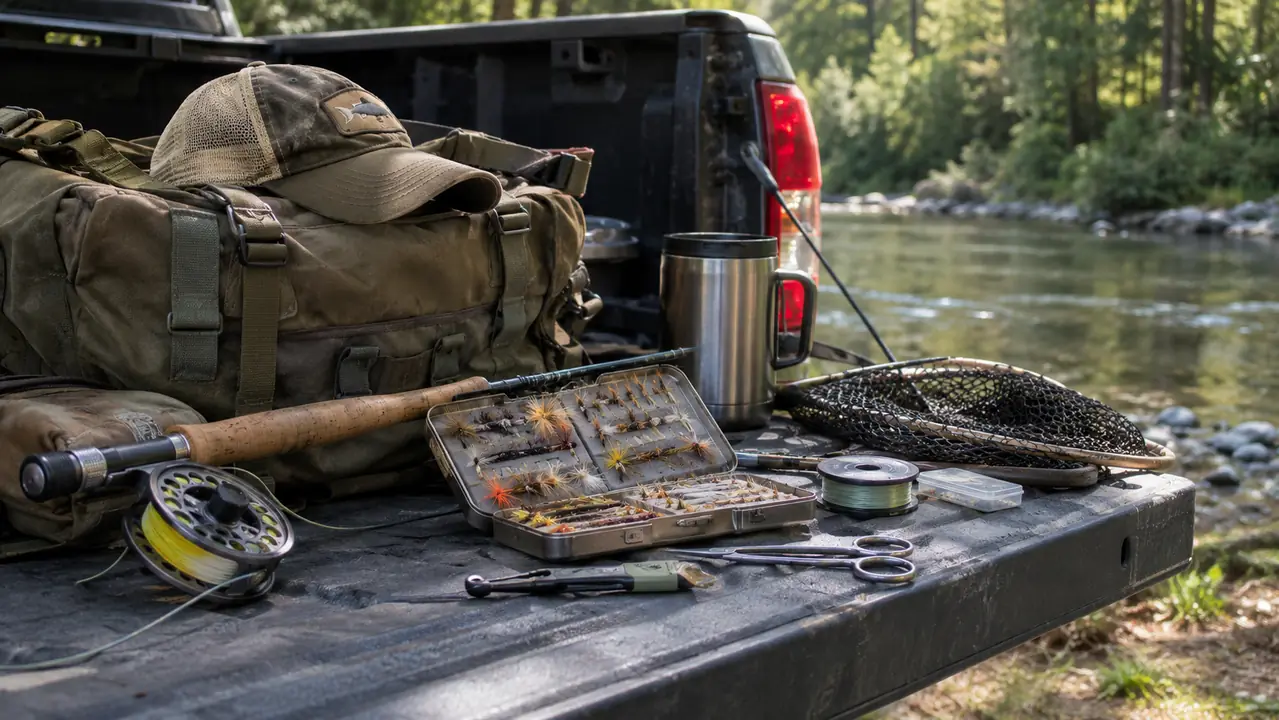
The tippet holder carries up to five spools and attaches with a carabiner. Five is the right number for how I fish. Two sizes of tippet for dries, two for nymphs, one spool of something heavier for the occasional streamer day. It hangs off the vest and it does not rattle, which is more than I can say for the loose spools that used to roll around in my chest pack and disappear behind the truck seat.
If you fish more variety than that, you will run out of room. Five spools is a ceiling and it is a ceiling, not a suggestion. People who carry eight spools of tippet in four diameters plus fluoro will need a second holder or a different system, and that is worth knowing before you buy rather than after.
The line clipper and the retractor it hangs on are the pieces I reach for most after the hemostat. The clipper sits where you can find it without looking, and the retractor pulls it back when you let go. Neither is complicated. Both are the difference between clipping a tag end in two seconds and digging through a pocket with one hand while a fish is still in the net.
The pieces I did not name are the pieces I do not reach for. That is not a scandal and it is not unique to this kit. Every kit on the shelf has two pieces that seemed like a good idea in the design meeting. What matters is that you know which three you are actually buying, and now you do.
What I Would Change
Two things. The first is storage. Once the pieces are out of the package, keeping them together is your job. Mine live in a vest pocket in roughly the same arrangement every trip and I still lose one of the small ones for a week at a time. If you need every tool to have a labeled home, plan on a small pouch as part of the purchase.
The second is the material question I flagged early. Aluminum is light and it dents. I dropped the kit on rock in June and one of the bodies took a mark that is not coming out. It still works fine and I do not think about it anymore, but if you want tools that look on year five exactly the way they looked on day one, aluminum is the wrong material and this is the wrong kit. The hemostat is stainless and it has held up better than the rest.
Who This Is For
This kit is for the angler who wants one purchase to cover the small stuff and does not want to think about it again. If you are newer to fly fishing and building a vest from nothing, the FF3 covers the hemostat, the net release, the tippet holder and the clipper in one flat package that weighs a little over half a pound. None of it will be the thing that fails on you in your first three seasons.
It is a reasonable gift for the same reason. Booms Fishing built this as an affordable starter kit and it reads that way in a good sense. Nothing in it will embarrass anybody on the water, and the hemostat in particular is the sort of tool that a person keeps after they have replaced everything around it.
Who Should Skip It
Skip it if you carry more than five spools of tippet, if you need tools that survive being dropped on basalt more than once, or if you already own a hemostat and a net release you trust. There is nothing in the FF3 that will improve on a release you already like, and buying a second one to save a few steps is how vest pockets get heavy and tempers get short.
Skip it too if you want the kit to organize itself. It does not. It hands you seven useful pieces and then hands you the problem of where they live, and if that is going to bother you every trip, spend the money elsewhere and save yourself the aggravation.
I have had the FF3 on my vest since March and I expect it to be there next March. It is not the last tool kit I will ever buy, and it is the one I would hand to somebody just starting out who does not want to make six separate decisions before their first cast. That is a real thing for a piece of gear to be good at.
If You Are Building a Vest From Nothing, Start Here
Hemostat, net release, tippet holder, clipper. Four jobs covered in one flat package that weighs a little over half a pound and stows in a glove box.
Amazon See the FF3 Kit on Amazon →